


What Is Food Processing and Packaging Equipment?
Food processing and packaging equipment turns raw ingredients into products that can be handled, stored, and prepared consistently. It includes washers, cutters, mixers, ovens, pasteurizers, fillers, sealers, labelers, and inspection systems. On a production floor, these machines may move a product from a stainless-steel mixing tank to a sealed pack in minutes. The details matter: temperature controls, cleanable surfaces, accurate filling, and reliable seals can all affect product quality and safety.
The scale of food loss gives this equipment wider significance. FAO’s 2024 progress report on Sustainable Development Goal 12.3 estimates that 13.2% of food was lost between harvest and retail during 2016–2022. UNEP’s Food Waste Index Report 2024 estimates that 1.05 billion tonnes of food were wasted in 2022 across households, food service, and retail. Better processing and packaging cannot solve every cause of loss. Still, careful portioning, protective packaging, and dependable storage can help preserve food and extend usable life.
As former FDA Deputy Commissioner Frank Yiannas has put it, “Food safety is a shared responsibility.” Equipment supports that responsibility, but it does not replace trained operators, maintenance, or sound process controls. That distinction matters. A faster line is not automatically a better line, and a package that looks secure may still fail under real handling conditions. Understanding food processing and packaging means looking at the full system: the product, the machines, the people, and the conditions from production to delivery.
Definition and Scope of Food Processing and Packaging Equipment
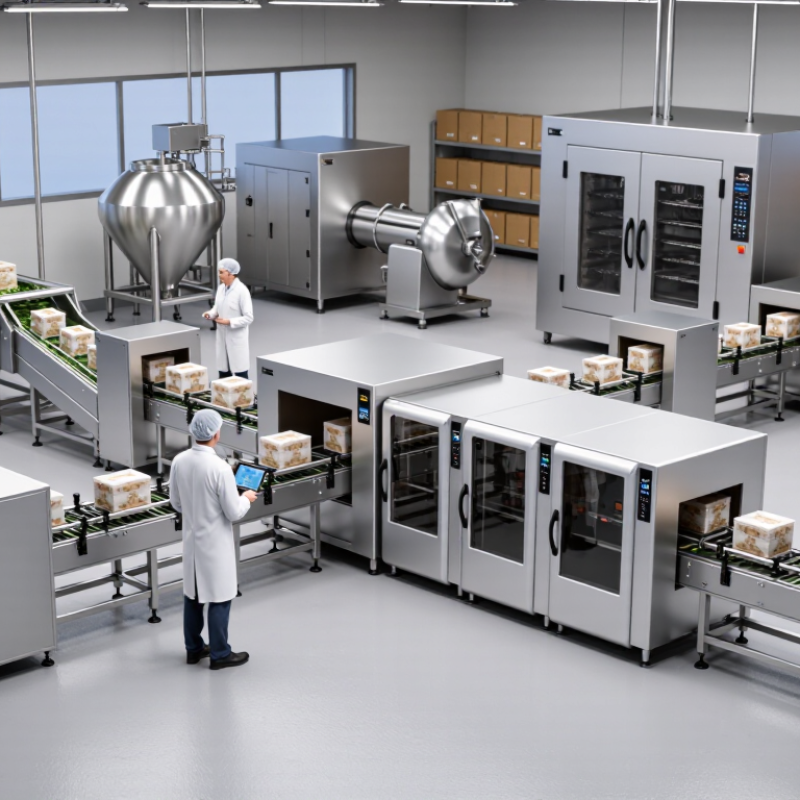
Food processing and packaging equipment includes the machines and supporting systems used to prepare, transform, preserve, portion, and enclose food. Processing may involve washing leafy vegetables, grinding grain, mixing dough, heating sauces, chilling dairy products, or drying fruit. Common machines include conveyors, cutters, mixers, pasteurizers, ovens, chillers, dryers, and filling systems. Some equipment performs one task; integrated lines connect several steps. The boundary between processing and packaging can blur. A depositor, for example, may portion a product directly into containers. Not always a clean division.
Packaging equipment places food into suitable containers, closes them, and prepares packs for handling or distribution. Scales and fillers measure portions; sealers, cappers, and labelers complete individual packs. Case packers and palletizing systems handle larger units. Inspection devices can check fill levels, seals, or package weight, depending on the line. The equipment must suit the food’s texture, temperature, and handling needs. A soft pastry needs different feeding and portioning than dry grains. Cleanable surfaces, accessible parts, and practical maintenance also matter. In real facilities, small design choices can affect cleaning time and product consistency. A layout that looks efficient on paper may be awkward to wash.
| Equipment Category | Definition and Main Purpose | Typical Equipment Examples | Where It Fits in the Production Line | Common Food Applications |
|---|---|---|---|---|
| Receiving and preparation | Equipment that accepts, inspects, cleans, sorts, or prepares raw ingredients before processing. | Hoppers, conveyors, washers, graders, peelers, and cutting equipment | Raw-material intake and pre-processing | Produce, grains, meat, seafood, and prepared-food ingredients |
| Size reduction and mixing | Machines that change ingredient size or combine ingredients into a consistent mixture. | Grinders, mills, slicers, mixers, blenders, and emulsifiers | Ingredient preparation and formulation | Flour, sauces, dough, minced products, beverages, and seasonings |
| Thermal processing | Equipment that applies heat or controlled cooling to cook food, reduce microorganisms, or achieve a required product texture. | Ovens, kettles, fryers, pasteurizers, blanchers, and chillers | Cooking, preservation, and temperature control | Baked goods, dairy products, canned foods, meat, sauces, and ready meals |
| Separation and clarification | Equipment that separates ingredients or removes unwanted solids, liquids, or particles from a food stream. | Screens, filters, centrifuges, separators, and presses | Ingredient extraction, purification, and product finishing | Juices, edible oils, dairy products, starch, and liquid foods |
| Forming and portioning | Machines that shape, divide, or deposit food into consistent portions or product forms. | Depositors, moulders, dividers, extruders, and portioning machines | Product formation before cooking, freezing, or packaging | Bakery products, pasta, confectionery, snacks, and formed foods |
| Filling and packaging | Equipment that places food into containers or wraps it in packaging designed for handling, distribution, and product protection. | Fillers, baggers, tray sealers, canning machines, and wrapping machines | Primary packaging | Beverages, powders, sauces, fresh foods, snacks, and shelf-stable foods |
| Package closing and marking | Machines that close packages and apply required product or traceability information. | Cappers, sealers, labelers, date coders, and checkweighers | After filling and before case packing | Packaged foods and beverages across retail and food-service channels |
| Inspection and quality control | Systems that check product or package characteristics to help identify defects and verify specified production requirements. | Metal detectors, X-ray inspection systems, vision systems, and weighing systems | At selected points during processing and packaging | Food products where weight, package integrity, or foreign-material checks are required |
| End-of-line handling | Equipment that groups, packs, stacks, or moves finished packages for storage and shipment. | Case packers, carton erectors, palletizers, and conveyors | Secondary packaging and distribution preparation | Retail cases, food-service packs, and palletized shipments |
| Supporting systems | Utilities and sanitation-related equipment that support hygienic, reliable operation of production and packaging lines. | Clean-in-place systems, pumps, tanks, compressed-air systems, and temperature-control units | Across the processing and packaging facility | Food plants requiring controlled cleaning, fluid transfer, or process conditions |
Related Posts
-
10 Food Processing and Packaging Tips for Global Buyers?
-
What Is Food Processing and Packaging Machinery?
-
Top 10 Food Making Machinery Tips for Global Buyers
-
Top 10 Food Machinery Innovations You Must Know About in 2023
-
Top Food Products Machinery Trends You Need to Know for Business Growth
-
Why Is Food Machinery Essential for Modern Food Production?