10 Food Processing and Packaging Tips for Global Buyers?
Global buyers now evaluate food products beyond price, taste, and delivery speed. They examine safety controls, shelf life, material performance, and supplier transparency. This is why food processing and packaging decisions require practical evidence, not attractive promises.
The FAO’s The State of Food and Agriculture 2019 reported that 13.2% of global food production was lost between harvest and retail in 2021, excluding retail waste. Packaging cannot solve every loss, but suitable barriers can protect products from oxygen, moisture, light, and physical damage. A weak seal can ruin an entire pallet. The UNEP Food Waste Index Report 2024 estimated that 1.05 billion tonnes of food were wasted in 2022, across households, food service, and retail. These figures make portion sizing, date coding, transport testing, and resealable formats commercial priorities.
Safety remains non-negotiable. The World Health Organization estimates that contaminated food causes about 600 million illnesses and 420,000 deaths each year. Global buyers should therefore review HACCP systems, traceability records, allergen controls, and supplier audit results. ISO 22000 certification may support confidence, but certification alone does not replace factory discipline. Ask to see real batch records.
Small details matter. Can workers read the label under poor warehouse lighting? Does the carton survive humid containers and repeated handling? Are packaging materials compatible with local recycling systems? No checklist is perfect. A supplier may provide excellent samples but inconsistent production. These ten food processing and packaging tips help buyers compare technical claims, test performance, and make more reliable sourcing decisions. The goal is not merely longer shelf life. It is safer food, fewer damaged shipments, and clearer accountability across borders.
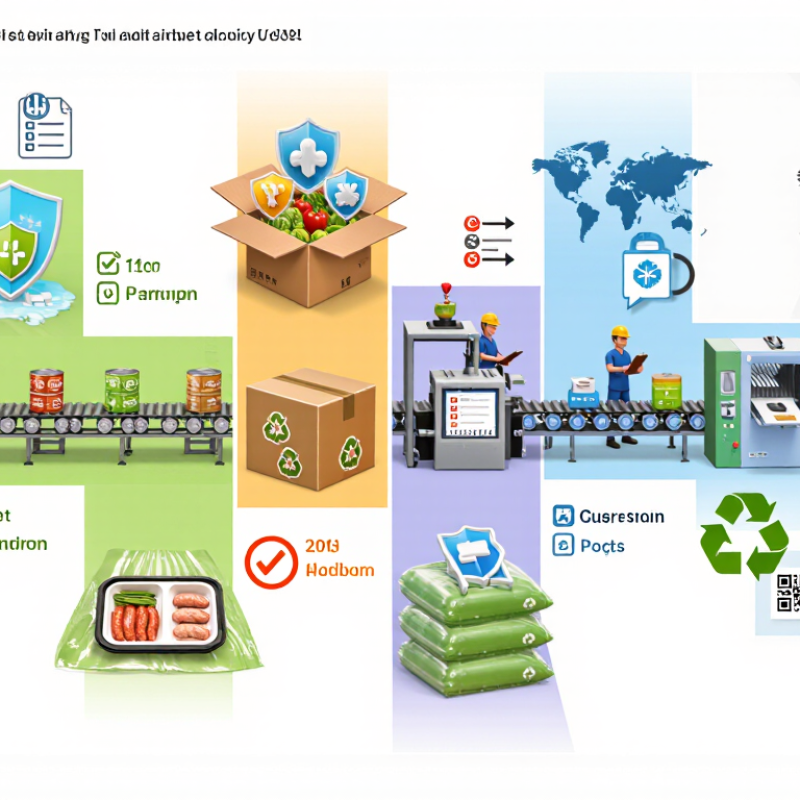
Define Product Requirements and Target Markets
Define product requirements before comparing suppliers or packaging formats. Specify ingredients, allergens, moisture sensitivity, shelf life, pack size, storage temperature, and shipping conditions. Target markets need equal attention. Label language, nutrition rules, date marking, and recycling requirements vary by country. Codex Alimentarius standards provide a useful technical baseline, but local authorities may interpret requirements differently. Verify every detail with an importer or qualified regulatory specialist.
Tip: Build a market matrix. Record climate, distribution time, consumer portion size, and legal label elements. FAO reports that 13.2% of food is lost between harvest and retail globally. Weak packaging can increase that loss. Test seals after vibration, humidity, and temperature changes. Small failures become expensive quickly.
Tip: Match packaging claims to evidence. The UNEP Food Waste Index Report 2024 estimated 1.05 billion tonnes of food waste in 2022. Better portion control and clearer date information may help, but packaging alone cannot solve waste. A perfect specification rarely exists. In practice, teams often overlook opening convenience or local recycling access. Review those assumptions with distributors and conduct pilot shipments before scaling.
Choose Packaging Materials for Product Protection
Packaging materials must protect food from moisture, oxygen, light, pressure, and temperature changes. The right choice depends on the product’s fat content, acidity, shelf life, and shipping route. A dry snack may need a strong moisture barrier, while chilled food requires materials that remain stable in cold conditions. Packaging should also prevent leaks, crushing, and seal failure during handling.
Tips: Test samples under realistic transport conditions. Place packed products in humid rooms, cold storage, and vibration tests. Check seal strength after each trial. Inspect the inner surface for peeling, odor transfer, or discoloration. Keep it practical. A package that looks attractive but fails after two weeks is not reliable. Materials should meet applicable food-contact requirements in the destination market, with traceable specifications and supplier test records.
Global buyers should request evidence for barrier performance, migration safety, and temperature tolerance. Product protection is not only about the outer carton. Closures, liners, films, trays, and cushioning all affect quality. I have seen careful designs weakened by a poor seal or an oversized box. That mistake is easy to miss during factory inspection. Review packaging after filling, stacking, and simulated delivery. Test before scaling. Small improvements, such as stronger corner protection or better moisture control, can prevent major losses in transit.
Verify Global Labeling, Certification, and Import Rules
Global buyers should verify labeling, certification, and import rules before approving any food shipment. A label that passes in one market may fail in another. Check the required language, product name, ingredient order, allergen statements, net weight, nutrition panel, origin, and date format. Metric units are often required. Some markets also require a local importer’s address or a traceable lot code.
Ask the supplier for current certificates, not old scanned copies. Depending on the product, authorities may request food safety plans, laboratory results, sanitary certificates, or facility registration records. Confirm whether certificates come from an accepted authority. Then compare every document with the shipment details. Product names, batch numbers, weights, and production dates should match exactly. Small differences can cause delays.
Import rules also depend on the tariff classification, packaging materials, storage temperature, and destination port. Confirm the correct HS code with a customs professional or the relevant government authority. Keep written evidence of each verification step. A spreadsheet helps, but it is not proof by itself. Regulations change. Even experienced teams can miss a revised allergen requirement or a new recycling symbol. Review the destination authority’s latest guidance before production, and leave time for label corrections. That extra review may feel slow. It is usually cheaper than holding a container at the border.
Optimize Quality Control, Logistics, and Shelf Life
10 Food Processing and Packaging Tips for Global Buyers
Global buying begins with measurable quality. Write product specifications for moisture, weight, microbiological limits, and appearance. Approve suppliers through documented audits and HACCP-based controls. Verify critical temperatures during cooking, cooling, and storage. Keep batch codes readable on every carton. Test package seals after vibration, compression, and cold exposure. Small leaks become expensive claims.
Packaging must protect food across long routes. Select barrier materials that limit oxygen, moisture, and light. Match pack size with pallet stability and container space. Add temperature indicators or data loggers for chilled goods. Confirm labels, allergen declarations, and traceability records before shipment. The FAO’s 2019 State of Food and Agriculture estimated that 13.2% of food is lost between harvest and retail. Better process control can reduce this waste.
Shelf life needs evidence, not optimism. Run real-time and accelerated stability tests, then repeat them after transport trials. The UNEP Food Waste Index Report 2024 estimated 1.05 billion tonnes of food waste in 2022. That figure makes packaging decisions operational, not cosmetic. Buyers should review supplier trend data monthly and investigate repeated deviations. We still miss failures when inspections happen only at loading. No checklist is perfect. Humidity, rough handling, and delayed customs can expose weak assumptions, so every shipment should improve the next specification.