

What Is Food Processing and Packaging Machinery?

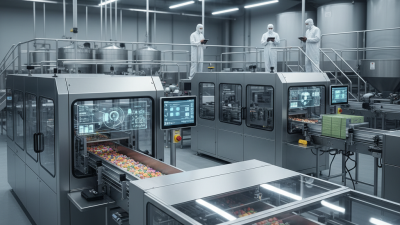
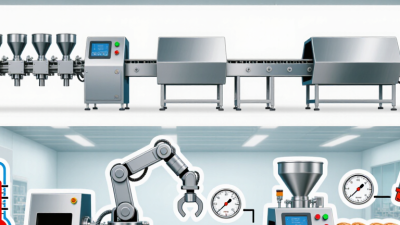
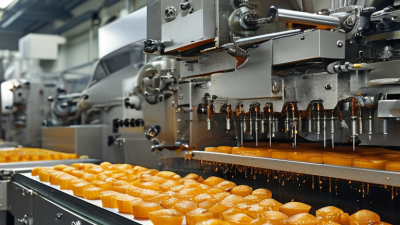
Food processing and packaging machinery forms the working backbone of modern food production. It transforms raw ingredients into safe, consistent, and market-ready products. Typical equipment includes mixers, cutters, conveyors, fillers, heat exchangers, sealers, labeling machines, and inspection systems.

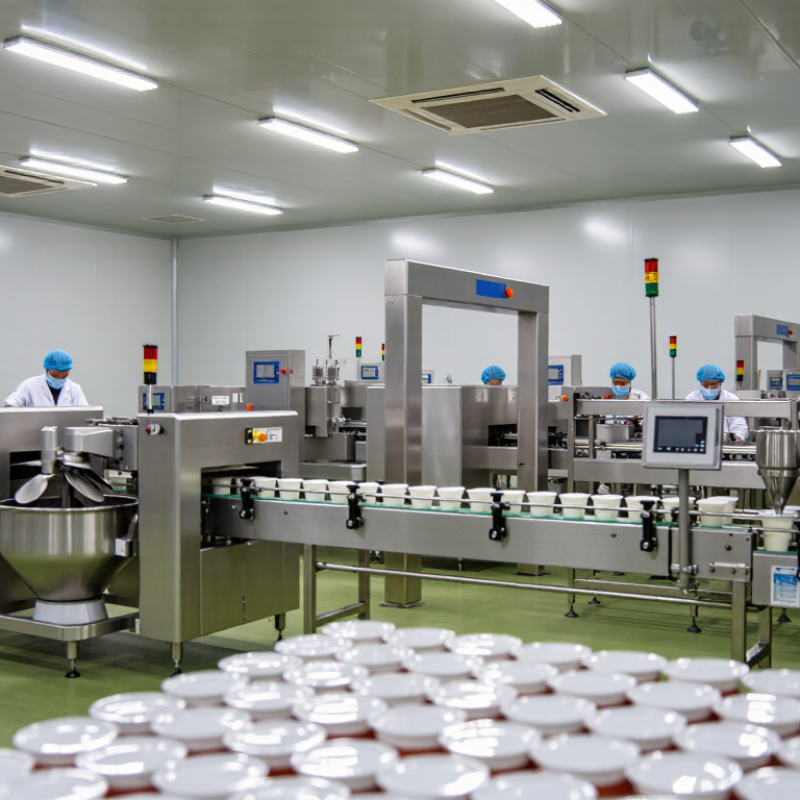
These machines do more than increase production speed. They control temperature, portion size, moisture, product contact, and package integrity. A stainless-steel filler may handle thousands of yogurt cups hourly, while a metal detector checks each sealed pack. Small design choices matter. A poorly positioned sensor can create waste, delays, or inconsistent weights.

Walter Soroka, a respected packaging educator and author, wrote, “Packaging is the science, art, and technology of enclosing and protecting products for distribution, storage, sale, and use.” His definition highlights the connection between machinery, product protection, and supply-chain performance. Packaging equipment must protect food from contamination, oxygen, light, moisture, and physical damage. It must also support clear labeling and practical handling.

In real facilities, performance depends on more than machine specifications. Product viscosity, cleaning routines, operator training, floor space, and maintenance access all influence results. A machine that performs well with dry snacks may struggle with sticky sauces. That difference is easy to underestimate.

The best system is not always the fastest one. It is the system that delivers reliable output, controlled quality, efficient changeovers, and repeatable sanitation. Even advanced machinery requires human judgment. Engineers and operators must keep questioning the process, because “automatic” does not mean “perfect.”
What Is Food Processing and Packaging Machinery?

Food Processing Machinery: From 72°C Pasteurization to −18°C Freezing

Food processing and packaging machinery turns safety targets into controlled operations. In high-temperature short-time pasteurization, milk is commonly heated to 72°C for 15 seconds. This benchmark appears in the U.S. Pasteurized Milk Ordinance, although local requirements may differ. Plate heat exchangers, flow-diversion valves, and calibrated sensors must work together. A temperature display alone proves very little.

Then the product moves toward cold storage. Freezing at −18°C is a widely used commercial benchmark for maintaining frozen food quality. Blast freezers remove heat quickly, limiting large ice crystals and texture damage. Packaging machinery adds another barrier through sealed films, accurate filling, and date coding. The International Institute of Refrigeration links reliable cold chains with reduced food losses, while FAO reported that 13.2% of food was lost between harvest and retail in 2021. The machinery matters because time and temperature interact.

Numbers can mislead. A freezer set to −18°C may still hold warmer food near the door. Sensors drift, seals weaken, and overloaded conveyors slow cooling. Operators need documented calibration, airflow checks, and product-core measurements. UNEP estimated 1.05 billion tonnes of food waste in 2022, showing why small process failures deserve attention. Real facilities are rarely perfect. That is where better monitoring begins.

Packaging Machinery: Filling, Sealing, Labeling, and Coding Systems

Packaging machinery turns prepared food into consistent, protected units. In a typical line, filling equipment measures sauce, grains, or liquids into containers. Accuracy matters because small volume changes affect costs and consumer trust. Servo-driven pumps can handle thick products, while gravity systems suit free-flowing liquids. Operators still need to check temperature, viscosity, and container position. Machines cannot correct poor preparation.

Sealing equipment closes trays, pouches, bottles, and cartons. Heat sealing requires suitable temperature, pressure, and dwell time. Too much heat can wrinkle film or damage a seal. Too little heat may create hidden leaks. Filling and sealing stages often use sensors to stop the line when containers are missing. This simple safeguard reduces spills and contamination risks. Cleaning access also matters. Smooth stainless-steel surfaces and tool-free components can shorten sanitation work. A fast line is not always a better line.

Labeling systems apply product information with controlled placement and steady speed. Coding systems print batch identifiers, dates, and traceability details. Cameras or scanners can verify missing labels, blurred codes, and incorrect positions. During changeovers, operators should test several units before full production. One overlooked roller can skew every label. Setup data may also be incomplete, so trial runs with real products remain valuable. Reliable performance depends on trained people, measured checks, and honest review.

What Is Food Processing and Packaging Machinery? – Packaging Machinery: Filling, Sealing, Labeling, and Coding Systems
Machinery Category Primary Function Typical Food Applications Common Machine Formats Key Operating Variables Typical Output Range* Important Hygiene or Quality Considerations
Food Processing Equipment Changes the physical or chemical characteristics of food before packaging. Mixing, grinding, slicing, cooking, blanching, pasteurizing, homogenizing, and drying.
  • Mixers and blenders
  • Cutters and slicers
  • Heat exchangers
  • Pasteurizers
  • Dryers and ovens
Temperature, processing time, pressure, moisture, particle size, and product viscosity. Approximately 100 kg/h to more than 20,000 kg/h, depending on the process. Food-contact surfaces should be corrosion-resistant, easy to clean, and designed to reduce product retention and contamination risks.
Liquid and Paste Filling Machines Measures and dispenses a controlled volume or weight of liquid, semi-liquid, or viscous product into containers. Water, beverages, sauces, oils, dairy products, syrups, soups, and personal-care food ingredients.
  • Volumetric fillers
  • Gravimetric fillers
  • Piston fillers
  • Overflow fillers
  • Net-weight fillers
Fill volume, product viscosity, foaming tendency, container size, nozzle design, and dosing accuracy. Approximately 10 to 600 containers per minute. Product-contact parts commonly require hygienic design, clean-in-place capability where applicable, and protection against dripping or cross-contamination.
Dry Product Filling Machines Portions powders, granules, or solid pieces into bags, pouches, bottles, jars, or cartons. Cereals, rice, flour, sugar, snacks, coffee, spices, confectionery, and frozen pieces.
  • Auger fillers
  • Volumetric cup fillers
  • Multihead weighers
  • Linear weighers
Bulk density, particle size, flowability, target weight, product fragility, and dust generation. Approximately 15 to 200 portions per minute. Dust control, accurate weighing, gentle product handling, and separation of allergen-containing materials are important considerations.
Form-Fill-Seal Systems Forms packaging material, fills it with product, and seals the package in one integrated process. Snacks, frozen foods, fresh produce, coffee, powders, sauces, ready meals, and medical or food-grade sachets.
  • Vertical form-fill-seal systems
  • Horizontal form-fill-seal systems
  • Thermoform-fill-seal systems
Film width, sealing temperature, sealing pressure, film tension, product drop timing, and package dimensions. Approximately 20 to 250 packages per minute. Correct seal temperature and pressure are essential for package integrity. Film compatibility and seal contamination should also be controlled.
Heat-Sealing Machines Closes flexible packaging by applying controlled heat, pressure, or a combination of both. Plastic pouches, laminated films, sachets, bags, and food-service packs.
  • Continuous band sealers
  • Impulse sealers
  • Constant-heat sealers
  • Tray sealing machines
Sealing-bar temperature, dwell time, pressure, film structure, seal width, and line speed. Approximately 5 to 200 packages per minute. Seal strength, leak resistance, clean seal areas, and compatibility between the packaging layers are critical to shelf life and safety.
Capping and Closing Equipment Applies and secures caps, lids, plugs, or other closures to filled containers. Bottled beverages, sauces, edible oils, dairy products, spreads, and liquid food supplements.
  • Screw cappers
  • Press-on cap systems
  • Snap-fit closing machines
  • Lid placement systems
Closure type, torque, cap orientation, container stability, thread alignment, and container material. Approximately 20 to 500 containers per minute. Closure torque must be controlled to prevent leakage while allowing practical opening. Tamper-evident features should be correctly applied.
Labeling Machines Applies product, regulatory, promotional, or logistics labels to containers and packages. Bottles, jars, cans, cartons, trays, pouches, cases, and multipacks.
  • Pressure-sensitive labelers
  • Wraparound labelers
  • Front-and-back labelers
  • Top and bottom labelers
  • Sleeve labeling systems
Container geometry, label material, adhesive performance, placement accuracy, conveyor speed, and product spacing. Approximately 20 to 600 containers per minute. Labels should remain legible and securely attached. Correct placement is important for ingredients, allergens, nutrition information, and traceability.
Coding and Marking Systems Prints variable information directly on packages, labels, cartons, or cases. Batch numbers, production dates, expiration dates, lot codes, barcodes, QR codes, and traceability data.
  • Continuous inkjet printers
  • Thermal inkjet printers
  • Thermal-transfer printers
  • Laser marking systems
  • Print-and-apply systems
Print resolution, substrate, ink or ribbon type, line speed, code size, contrast, and environmental conditions. From intermittent printing to more than 1,000 products per minute, depending on the application. Codes must be durable, readable, correctly linked to production data, and positioned where they remain visible throughout distribution.
Cartoning and Case Packing Machines Places primary packages into cartons, trays, bundles, or shipping cases. Retail cartons, multipacks, pouches, bottles, cans, snack packs, and ready-meal packages.
  • Horizontal cartoners
  • Vertical cartoners
  • Wraparound case packers
  • Robotic case packing systems
Package dimensions, loading pattern, carton board quality, adhesive or locking method, and product orientation. Approximately 10 to 400 primary packages per minute. Correct case configuration protects products during transport. Machine guarding and reliable carton closure are essential for operational safety.
Inspection and Checkweighing Systems Verifies package weight, seal quality, foreign-material absence, label presence, and code readability. Packaged foods requiring weight control, metal detection, seal inspection, or traceability verification.
  • Checkweighers
  • Metal detectors
  • X-ray inspection systems
  • Vision inspection systems
Detection sensitivity, product effect, target weight, reject timing, camera resolution, and inspection speed. Approximately 30 to 500 packages per minute. Inspection systems support quality assurance but do not replace good manufacturing practices, sanitation, process control, or validated procedures.
Conveyors and Material-Handling Equipment Transfers products, containers, packaging materials, and cases between processing and packaging stations. Almost all automated food processing and packaging lines.
  • Belt conveyors
  • Chain conveyors
  • Roller conveyors
  • Accumulation tables
  • Elevators and feeders
Speed, product spacing, conveyor width, load capacity, incline angle, accumulation time, and changeover requirements. Approximately 5 to 120 meters per minute, depending on product and layout. Conveyors should minimize product damage, allow access for cleaning, and prevent product buildup in hard-to-reach areas.
Packaging Materials Provides containment, protection, information, and support for distribution and retail presentation. Flexible films, rigid containers, trays, cartons, closures, labels, and transport cases.
  • Plastic and laminated films
  • Glass or plastic containers
  • Metal cans
  • Paperboard cartons
  • Corrugated cases
Barrier performance, sealability, strength, transparency, recyclability, oxygen transmission, moisture transmission, and package size. Selected according to product requirements rather than machine speed alone. Material selection should protect food quality, meet applicable food-contact requirements, and support safe handling, storage, labeling, and disposal.

Sanitary Design: HACCP, 3-A Standards, and 80°C CIP Cycles

What Is Food Processing and Packaging Machinery?

Sanitary design turns processing machinery into a food-safety control, not merely a production tool. HACCP identifies biological, chemical, and physical hazards before they reach consumers. The CDC estimates that foodborne illness causes about 48 million illnesses and 3,000 deaths annually in the United States. That figure makes weak cleaning procedures difficult to defend.

Equipment should support smooth product flow, accessible inspection points, and minimal residue traps. 3-A Sanitary Standards emphasize hygienic construction, cleanable surfaces, and suitable materials for food contact.

A validated 80°C CIP cycle can remove soil and reduce microbial risk, but temperature alone is not proof of sanitation. Time, chemical concentration, flow velocity, and return-line coverage also require verification. Operators should record conductivity, temperature, and final-rinse results.

The machine must be cleanable.

The FAO and WHO estimate that contaminated food affects approximately 600 million people worldwide each year. This data reinforces the need for documented controls across filling, sealing, and conveying.

Packaging machinery should avoid exposed threads, hollow frameworks, and poorly drained surfaces. In practice, however, even compliant equipment can fail when rushed changeovers shorten CIP contact time. That uncomfortable gap deserves attention. Design standards guide performance; trained people and reliable records demonstrate it.

Automation Performance: 100–1,200 Packs per Minute and OEE Metrics

What Is Food Processing and Packaging Machinery?

Automation Performance: 100–1,200 Packs per Minute and OEE Metrics

Food processing and packaging machinery can run from 100 to 1,200 packs per minute. The real output depends on pack size, product texture, sealing method, and changeover time. A liquid pouch line may move rapidly, while sticky sauces require slower, more careful dosing. PMMI’s 2024 State of the Industry report identifies labor shortages and automation investment as major packaging priorities. Speed matters, but repeatable performance matters more.

OEE measures this performance through availability, performance, and quality. For example, a line rated at 600 packs per minute may achieve 90% availability, 80% performance, and 98% quality. Its effective result becomes about 423 good packs per minute. The commonly cited world-class OEE benchmark is 85%, while many factories remain near 60%, according to widely used OEE benchmark studies. Small losses become visible quickly. A ten-minute film change can remove thousands of potential packs.

The uncomfortable part is that a faster machine can create more waste. I have seen operators protect headline speed while accepting frequent jams and manual rechecks. That is not strong automation. Plants should record micro-stops, reject causes, cleaning time, and actual good packs. Sensor data helps, but poor definitions can distort OEE. A line may report 82% while operators quietly repair seals between production cycles. The metric needs honest observation. Temperature drift, inconsistent filling, and worn cutting tools often explain the missing performance.

Packaging machinery performance is commonly evaluated by throughput and Overall Equipment Effectiveness (OEE). OEE is calculated as Availability × Performance × Quality. The chart shows a calculated operating profile across packaging speeds from 100 to 1,200 packs per minute.

Smart Packaging: Traceability Codes, Shelf Life, and Material Efficiency

Food processing and packaging machinery now does more than fill, seal, and label products. Smart equipment connects production data with each package through traceability codes. A 2D code can record a batch, production time, ingredient source, and recall status. GS1’s Sunrise 2027 guidance encourages retailers to support richer 2D barcodes. This shift can make supply chains more transparent, though data quality remains a weak point.

Shelf life also depends on machinery settings. Accurate filling, controlled sealing temperatures, and reduced oxygen exposure can protect food quality. Better packaging may prevent unnecessary disposal. The United Nations Environment Programme reported that 1.05 billion tonnes of food were wasted in 2022. Packaging cannot solve every waste problem. Still, reliable barrier performance can help products survive transport and storage.

PMMI industry research also highlights automation, inspection, and connected equipment as major packaging priorities. These systems can detect seal defects before products leave the factory.

Tips: Test codes under condensation, glare, and low light. Keep batch data readable and secure. Measure material use per package, not only total output. Lightweight films and right-sized cartons can reduce waste, but thinner materials may weaken protection. That trade-off needs real shelf-life testing. Sometimes, the most efficient line is not the fastest one. It may be the one producing fewer rejects, less scrap, and clearer data.