

Top 10 Produce Packaging Machinery Suppliers Worldwide?

Selecting reliable produce packaging machinery suppliers requires more than comparing machine prices. Fresh vegetables, fruit, and prepared produce vary in size, moisture, firmness, and shelf-life needs. A machine that handles apples smoothly may bruise leafy greens or seal delicate berries poorly. This guide introduces ten leading suppliers worldwide and examines their equipment, service networks, customization options, and documented industry experience.

Jorge Izquierdo, Vice President of Market Development at PMMI, often stresses that packaging automation must be evaluated through “productivity, flexibility, and total cost of ownership.” That perspective matters here. A high-speed line may appear impressive, but speed alone does not guarantee better results. Sanitation access, tool-free changeovers, gentle product handling, sensor accuracy, and spare-parts availability can determine daily performance. Small details matter. Wet floors do too.

The companies discussed in this article serve different production realities. Some focus on weighing, filling, and sealing. Others specialize in vertical form-fill-seal systems, tray sealing, flow wrapping, inspection, or complete automated lines. Their strengths may differ across large processors, regional growers, and smaller packing houses. No ranking can fit every facility perfectly. That is an important limitation.

Our comparison considers machine capability, integration experience, maintenance support, energy awareness, and suitability for international operations. It also recognizes practical concerns, including operator training and unplanned downtime. Supplier claims should still be checked against site references, independent testing, and a clear return-on-investment analysis. The best choice is not always the most famous name. It is the supplier whose equipment performs consistently with your produce, workforce, and market requirements.
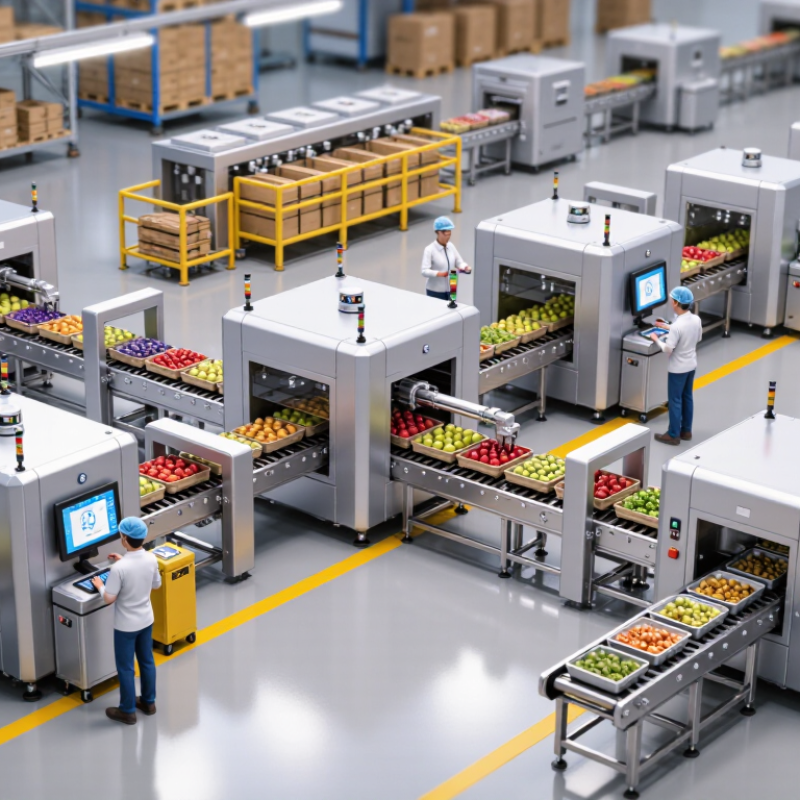
Top 10 Produce Packaging Machinery Suppliers Worldwide?

What Defines a Leading Produce Packaging Machinery Supplier?

A leading produce packaging machinery supplier understands the packing room, not only the machine. Its equipment must handle leafy greens, berries, roots, and irregular sizes. In real facilities, wet floors, cold air, and frequent product changes test every component. Stainless-steel frames, sealed drives, and tool-free cleaning points reduce daily risk. Small details matter. A stable infeed can prevent bruising, jams, and costly product loss. The supplier should prove these claims through trials using the customer’s produce.

Technical expertise appears in more than a polished brochure. Engineers should explain weighing accuracy, sealing temperature, gas control, throughput, and changeover time in plain language. They should provide test records, operating limits, maintenance schedules, and clear food-contact material information. Reliable suppliers also design around the site’s power, layout, sanitation routine, and labor skills. A machine that runs well in a showroom may struggle beside a busy cold room. That gap deserves honest discussion. Training should include actual fault recovery, not just button pressing.

Trust grows when service remains available after installation. Useful support includes stocked wear parts, response targets, remote diagnostics, and technicians who document repairs. Cybersecurity and software updates also deserve attention, especially on connected equipment. It is easy to choose the lowest quotation. Yet energy use, film waste, downtime, and difficult cleaning can quietly increase ownership costs. No machine is perfect. A dependable supplier admits limitations, measures performance openly, and improves the design when operators report a recurring problem. That practical honesty often separates a long-term partner from a seller with attractive specifications.

How Produce Packaging Machinery Suppliers Are Evaluated

Evaluating produce packaging machinery suppliers requires more than comparing quoted prices. Buyers should examine how each supplier handles leafy greens, berries, roots, and irregular produce. A reliable evaluation starts with a witnessed production trial. Ask for measured speed, seal integrity, product damage, and waste levels. Request results from similar lines, not ideal laboratory samples. Real crops are inconsistent. That matters.

Engineering depth is visible in changeover design, cleaning access, controls, and fault reporting. Operators should test format changes with ordinary tools and limited training. Hygiene claims need supporting documents, material specifications, and a clear sanitation procedure. Check whether the machine protects delicate products without slowing the line excessively. Energy use, compressed-air demand, spare-parts availability, and remote support also affect lifetime cost. A low purchase price can become expensive during harvest peaks.

Supplier reliability depends on evidence after installation. Review commissioning plans, training records, response times, warranty terms, and references from comparable operations. Ask who manages software updates and how performance data is stored. Independent inspection can expose gaps before payment or expansion. Still, evaluation methods are not perfect. A polished demonstration may hide difficult maintenance. I would score operator comfort more heavily than many procurement teams do. It often decides whether promised output survives a long shift.

Top 10 Produce Packaging Machinery Suppliers Worldwide? – How Produce Packaging Machinery Suppliers Are Evaluated

A neutral procurement model for comparing produce packaging machinery suppliers. The weighting reflects commonly assessed operational, technical, food-safety, and lifecycle criteria; it is not a ranking of individual companies.

Throughput and format flexibility receive the highest weights because produce lines must handle seasonal volume changes and different pack formats. Seal integrity, uptime, sanitation, integration, and resource efficiency are also essential for product protection, compliance, and total operating cost.

Top Global Suppliers of Produce Packaging Machinery

Top Global Suppliers of Produce Packaging Machinery

Top global suppliers of produce packaging machinery serve farms, processors, and distribution centers across varied markets. Their systems may include weighing, grading, washing, tray sealing, flow wrapping, and palletizing equipment. Experienced suppliers begin with the crop, not a standard catalog. Tomatoes bruise easily, while potatoes need stronger handling and ventilation.

Reliable suppliers provide documented testing before installation. They measure throughput, product loss, seal strength, and changeover time. A line producing 60 packs per minute may still fail if cleaning takes several hours. That detail matters during peak harvest. Operators also need clear controls, accessible parts, and practical training. Good engineering reduces waste without treating speed as the only goal.

Supplier comparison requires more than machinery price. Buyers should inspect factory records, service coverage, spare-part availability, and integration experience. Food-contact materials and hygienic design deserve careful verification. Claims can sound impressive. Evidence is better. A reference visit may reveal noisy conveyors, difficult cleaning points, or unstable software. No supplier fits every operation perfectly. Seasonal demand, labor skills, package formats, and local infrastructure can change the decision. Even a well-designed project may need adjustment after real produce enters the line.

Key Technologies Used in Produce Packaging Systems

Top 10 Produce Packaging Machinery Suppliers Worldwide: Key Technologies Used in Produce Packaging Systems

Produce packaging systems now combine weighing, vision inspection, sealing, and data tracking. Multihead weighers portion tomatoes, berries, or leafy greens with controlled accuracy. Optical cameras detect bruising, color changes, and foreign material before sealing. Servo-driven belts adjust speed when product flow becomes uneven. This reduces crushing. Yet no sensor catches every weak stem. That limitation needs honest testing.

Modified-atmosphere packaging uses gas flushing to slow oxidation and moisture loss. Humidity control matters for leafy products, especially after washing. Heat-seal jaws must maintain stable temperature, pressure, and dwell time. For delicate produce, gentle vacuum systems can remove air without flattening packs. Digital monitoring records seal temperature, reject rates, and downtime. Operators can trace recurring defects to a worn belt or misaligned film. In practice, data quality is often imperfect. Manual checks still matter.

Tips: Test the complete line with real produce, not empty trays. Measure yield, seal strength, sanitation time, and changeover waste. Keep critical sensors accessible for cleaning and calibration. Ask suppliers for validation records and clear maintenance intervals. A fast machine is not always the best machine.

Top 10 Produce Packaging Machinery Suppliers Worldwide? - Key Technologies Used in Produce Packaging Systems

Rank Anonymous Supplier Profile Primary Market Region Main Produce Applications Typical Machinery Portfolio Key Technologies Used Automation Level Common Packaging Formats Hygiene and Compliance Features
1 Supplier Profile 01 Western Europe Leafy greens, salads, herbs and berries Weighing, filling, tray sealing and flow wrapping lines Multihead weighing, modified-atmosphere packaging, servo motion control and automatic film tracking High-speed integrated lines Rigid trays, lidded trays, pillow bags and top-seal packs Stainless-steel construction, tool-less access, washdown-ready components and food-contact materials
2 Supplier Profile 02 Northern Italy Tomatoes, cucumbers, peppers and fresh-cut vegetables Vertical form-fill-seal, pouch-making and conveyor systems Continuous film sealing, nitrogen flushing, electronic weighing and recipe-based controls Medium-to-high automation Pouches, sachets, pillow bags and gusseted bags Open-frame hygienic design, stainless-steel contact areas and programmable cleaning settings
3 Supplier Profile 03 North America Apples, citrus, stone fruit and table grapes Inspection, grading, weighing, case packing and palletizing equipment Machine vision, optical sorting, robotic picking and barcode traceability High automation with robotic cells Clamshells, cartons, corrugated cases and reusable containers Product-contact surfaces designed for sanitation, guarded robotic zones and digital production records
4 Supplier Profile 04 Central Europe Potatoes, onions, carrots and root vegetables Bulk weighing, bagging, closing and pallet handling systems Net weighing, gravimetric dosing, automatic bag closing and pallet pattern control High-throughput automated systems Mesh bags, paper bags, polyethylene bags and cartons Corrosion-resistant frames, dust-management options and hygienic conveyor transfer points
5 Supplier Profile 05 Southern Europe Fresh-cut salads, mixed vegetables and prepared fruit Cup filling, lidding, sealing, labeling and secondary packing machines Ultrasonic or heat sealing, checkweighing, print inspection and vision-based label verification Flexible modular automation Cups, trays, bowls and multipacks Hygienic zoning, removable guarding, controlled sealing surfaces and compatible food-grade polymers
6 Supplier Profile 06 East Asia Leafy vegetables, mushrooms, berries and small fruit Compact weighers, tray sealers, conveyors and inspection units High-speed load cells, gas flushing, touchscreen PLC control and automatic reject systems Medium-to-high automation Small trays, punnets, cups and flexible pouches Smooth welds, protected electrical enclosures, food-grade belts and easy-access inspection points
7 Supplier Profile 07 United Kingdom and Ireland Potatoes, salads, vegetables and convenience produce Complete end-of-line systems, case packing and pallet wrapping Robotic case packing, conveyor accumulation, pallet wrapping and warehouse data interfaces Integrated end-of-line automation Cases, trays, cartons and stretch-wrapped pallets Washdown-compatible conveyors, safety interlocks and batch-level production traceability
8 Supplier Profile 08 Iberia Citrus, tomatoes, peppers, cucumbers and stone fruit Grading, electronic weighing, tray packing and carton forming systems Optical grading, electronic sizing, automatic carton erecting and weight feedback control Automated grading and packing cells Trays, cartons, punnets and reusable plastic crates Food-safe contact materials, accessible product paths and sanitation-oriented conveyor design
9 Supplier Profile 09 China and Southeast Asia Garlic, onions, potatoes, fruit and mixed vegetables Bagging, sealing, weighing, coding and basic palletizing machinery Auger or linear weighing, heat sealing, date coding and PLC-based machine control Entry-level to medium automation Mesh bags, laminated pouches, pillow bags and cartons Stainless-steel contact zones, enclosed drives and configurable safety guarding
10 Supplier Profile 10 Australia and New Zealand Apples, kiwifruit, berries, leafy greens and fresh-cut produce Produce grading, clamshell packing, tray sealing and robotic palletizing Machine vision, robotic pick-and-place, remote monitoring and line-level data collection High automation for export-oriented operations Clamshells, trays, cartons, punnets and export cases Hygienic stainless-steel structures, traceability software and safety systems aligned with international machinery requirements

Note: Supplier profiles are anonymized. Technology descriptions represent established capabilities commonly used in commercial produce packaging systems worldwide.

How to Select the Right Supplier for Your Operation

Selecting a produce packaging machinery supplier requires more than comparing catalog prices. FAO estimates that 13.2% of food is lost between harvest and retail. This makes gentle handling, accurate sealing, and reliable uptime operational priorities.

Production Profile Start with your real production profile. Record hourly throughput, product sizes, moisture levels, wash conditions, and seasonal changes. Then request a live trial using your produce, not a laboratory substitute. Measure bruising, seal integrity, changeover time, energy use, and rejected packs. Small details matter.

Sanitation & Service Check sanitation design carefully. Look for tool-free access, drainage, corrosion-resistant materials, and documented cleaning procedures. Ask for spare-parts availability and technician response times in your region. A cheaper machine can become expensive during harvest season. It happens.

Total Cost of Ownership Use total cost of ownership, not the purchase quotation alone. PMMI industry research consistently identifies labor constraints and automation investment as major packaging priorities. However, excessive automation may create difficult maintenance demands. Your team’s skills must match the system.

Performance Evidence Request references from operations with similar crop volumes. Review service records, software support, training, warranty limits, and expected output under normal conditions. UNEP reported 1.05 billion tonnes of food waste in 2022, showing why dependable packaging performance deserves serious attention. Do not accept impressive demonstrations without measurable evidence. A slower, adaptable line may outperform a faster machine that struggles with changing produce.