

Best Food Industry Machinery Manufacturers in China?

Choosing the best food industry machinery manufacturers in China requires more than comparing prices or browsing polished product catalogs. Buyers must assess whether a supplier can deliver stable output, hygienic design, dependable service, and equipment suited to a specific process. The stakes are practical: a poorly matched filling line can cause uneven portions, frequent stoppages, and costly product waste.

The need for reliable processing and handling is reflected in global data. The Food and Agriculture Organization reported that 13.2% of food was lost between harvest and retail in 2021, using the UN Sustainable Development Goal indicator. Better machinery cannot solve every cause of food loss, but accurate sorting, processing, packaging, and cold-chain equipment can support more controlled operations. That distinction matters. The figure is not a measure of losses caused by outdated machinery.

China also has a substantial industrial automation base. The International Federation of Robotics reported 276,288 industrial robots installed in China in 2023, representing 51% of global installations that year. These figures cover industries broadly; they do not rank food equipment suppliers. A careful shortlist should therefore examine food-sector experience directly. Ask for product-specific capacity data, stainless-steel specifications, cleaning procedures, spare-parts lead times, and references from comparable plants. Details matter. A machine’s stated speed may differ from its sustained output with real ingredients, operators, and changeovers. The sections that follow will outline how to compare Chinese manufacturers, verify technical claims, and identify practical questions before requesting quotations. There is no single best supplier for every factory; the right choice depends on the product, budget, and operating conditions.
Best Food Industry Machinery Manufacturers in China?

China’s Food Machinery Industry: 2023 Market and Export Indicators

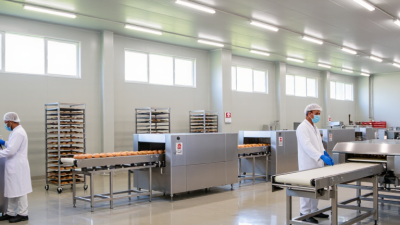
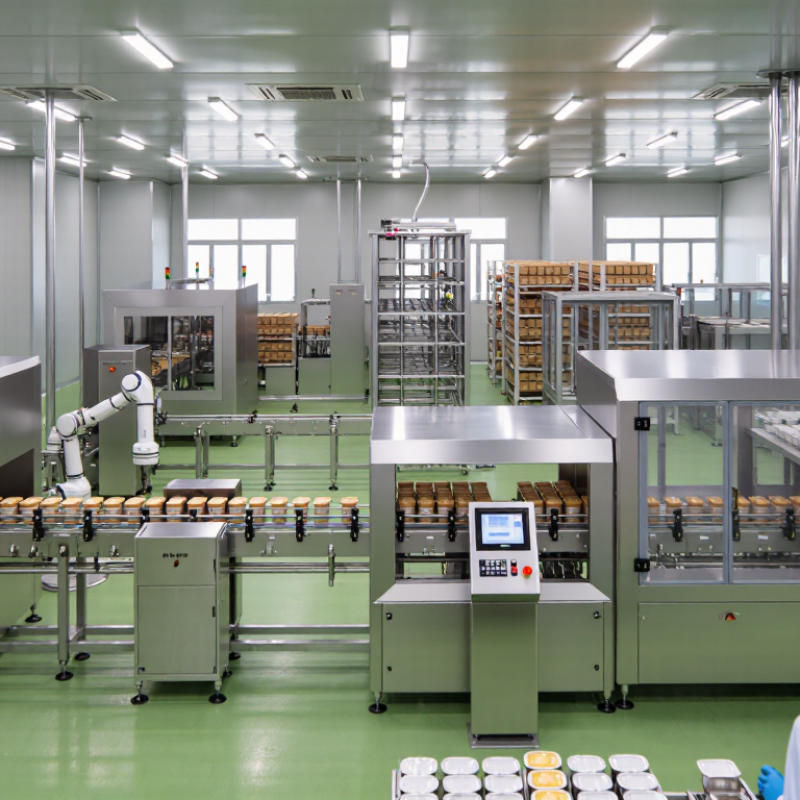
China’s food machinery market is best read through factory demand, not equipment catalogues alone. The National Bureau of Statistics reported that food manufacturing value added grew 3.3% in 2023. That points to steady, though uneven, investment needs in mixing, baking, filling, and inspection lines. A stainless-steel conveyor moving warm product through a washdown area is a practical detail; uptime and cleaning access matter as much as headline speed.

Exports need careful interpretation. China Customs reported that exports of mechanical and electrical products reached RMB 13.92 trillion in 2023, up 2.9% year on year. This broad category includes far more than food equipment. For a narrower view, UN Comtrade tracks industrial food-and-drink machinery under HS 8438, but packaging machines can fall under separate codes. The boundary is messy.

For buyers, export growth is not proof of consistent performance. Ask for throughput tests using the actual product, utility requirements, spare-parts lead times, and cleaning instructions. The International Organization for Standardization’s food-safety management guidance, including ISO 22000, also makes hygienic design and documented procedures relevant procurement checks. Small gaps matter. A line may run well during a short factory demo, then struggle with sticky dough or frequent product changes. These figures describe market activity, not a guarantee of machine quality.

Four Core Equipment Stages: Processing, Filling, Packaging, and Inspection

Food production lines work best when their four equipment stages are designed as one connected system.

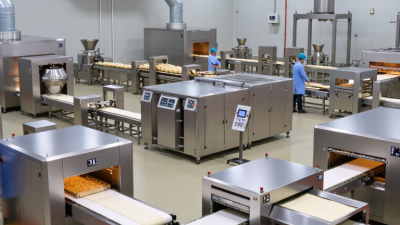
Processing machinery sets the product’s texture, temperature, and flow. For sauces, for example, operators may need a heated mixing tank, stable agitation, and a pump that handles the product without excessive foaming. Test with the actual ingredients. Water alone can mislead.

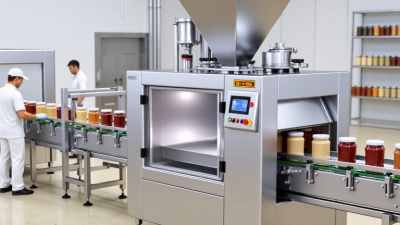
Filling equipment must match the container and product viscosity. Check fill accuracy at different speeds, and watch for drips around the nozzle.

Packaging machines then form, seal, or label each unit. Seal strength and clean changeovers matter more than impressive headline speed.

Inspection equipment adds another control point, using tools such as checkweighers, metal detectors, or vision systems where appropriate. Ask how test pieces and rejected packs are handled. Small details count.

When comparing Chinese manufacturers, review drawings, material specifications, service arrangements, and commissioning plans. Request a trial using representative products and packaging. Observe how quickly staff can clean contact surfaces and change formats. A polished demonstration is useful, but it cannot answer every production question. Some gaps only appear after a long shift. That is worth admitting before purchase. Ensure the line’s controls can exchange clear operating data, and confirm who supports troubleshooting after installation.

Chinese Manufacturers Compared: Tech-Long, Newamstar, and Hualian

China’s food machinery market is not one uniform category. Buyers comparing local manufacturers should separate beverage-filling specialists, integrated production-line builders, and flexible packaging suppliers. Grand View Research estimated the global food processing equipment market at USD 58.3 billion in 2022, with projected growth of 6.1% annually from 2023 to 2030. This is market context, not proof that any supplier performs better. A fast line can still disappoint if changeovers take hours or spare parts arrive slowly.

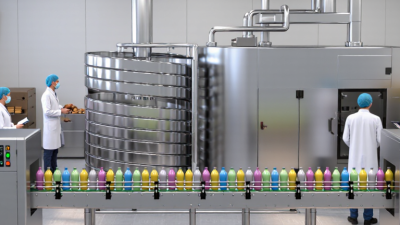
For beverage projects, examine filling accuracy, line speed, cleaning design, and whether the supplier integrates conveyors, labeling, and case packing. For broader food lines, check how well mixing, forming, and packaging equipment connect. For packaging-focused suppliers, ask for verified film compatibility and sealing consistency. These are practical comparison points, not a ranking. Request a factory acceptance test using your product, packaging, and target speed. Watch the first run closely. Small leaks matter.

Tips: Ask for recent references from plants with similar products and output. Review energy use, installation scope, operator training, and spare-parts lead times in writing. One caveat: published capacity figures may reflect ideal conditions, not everyday production. I would treat them as a starting point, then verify performance on-site. That extra check can feel slow, but skipping it is a risk.

Best Food Industry Machinery Manufacturers in China? — A Practical Supplier Comparison
Comparison Dimension What to Compare Evidence to Request Why It Matters
Equipment and product fit Confirm the machinery is designed for the specific product, container, packaging format, and production process. Written scope, process flow diagram, equipment list, and samples or reference runs using comparable products. Equipment suitable for one food or package format may not perform equally well with another.
Rated production capacity Compare output using the same product, container size, operating conditions, and definition of saleable product. Factory acceptance-test protocol stating the measurement period, operating conditions, and treatment of rejects and stoppages. A stated maximum speed is not directly comparable unless the test conditions are consistent.
Food-contact materials Check the specified grades and locations of materials used on product-contact surfaces, seals, and tubing. Bill of materials, material certificates where applicable, and a clear list of product-contact components. Material suitability depends on the food, cleaning chemicals, temperature, and operating environment.
Hygienic design Review cleanability, drainage, access for inspection, and the design of product-contact areas. Hygienic-design documentation and an explanation of cleaning and sanitation procedures; ask whether ISO 14159 was considered where relevant. Hygienic design supports effective cleaning, but it does not replace a validated sanitation program.
Controls and integration Check control-system scope, safety functions, data interfaces, and compatibility with upstream and downstream equipment. Electrical drawings, control-system description, interface list, and an integration responsibility matrix. Clear interface definitions help prevent delays during installation and commissioning.
Quality and testing Compare inspection procedures, component traceability, and the tests completed before shipment. Quality-plan summary, inspection records, test procedures, and agreed factory acceptance criteria. Documented checks make it easier to confirm that the delivered equipment meets the purchase specification.
Installation and commissioning Clarify which services are included, such as installation supervision, operator training, and production ramp-up support. Project schedule, scope of work, staffing plan, training outline, and commissioning acceptance criteria. Responsibilities, travel costs, and site-readiness requirements should be agreed before purchase.
Spare parts and service Compare recommended spare-parts coverage, support channels, service availability, and response commitments. Parts list with part numbers, quotation validity, service terms, and written support arrangements. Availability and lead times for critical components can affect maintenance planning and downtime risk.
Commercial and lifecycle cost Compare the complete project scope, including options, installation, training, shipping, and maintenance items. Itemized quotation, exclusions list, warranty terms, payment milestones, and estimated operating requirements. The lowest equipment price may not represent the lowest total cost of ownership.

Use this framework to compare supplier proposals on a like-for-like basis. Specific performance, compliance, materials, and service commitments should be verified against the quotation, technical documentation, and contract.

Sanitary Design Standards: ISO 14159:2002 and GB 16798-2010

Sanitary Design Standards: ISO 14159:2002 and GB 16798-2010

When comparing food industry machinery manufacturers in China, look beyond polished surfaces and product claims. ISO 14159:2002 offers hygiene requirements for machinery design, including reducing places where food residue and moisture can collect. GB 16798-2010 sets hygiene and safety requirements for food machinery. They are useful reference points, but neither standard replaces a machine-specific risk assessment.

Ask how product-contact surfaces are finished and joined. A weld near a filling nozzle should be smooth, continuous, and accessible for inspection. Check whether hollow frames are sealed and whether guards can be removed without awkward tools. Small details matter. A narrow crevice can hold residue after washing, even when the exterior looks spotless. Request drawings, material information, cleaning instructions, and records showing how relevant requirements were assessed. Claims of compliance deserve supporting evidence.

Design choices also depend on the food and cleaning routine. Sticky dough, fine powder, and acidic sauces create different hygiene challenges. In a factory review, watch a cleaning cycle and inspect difficult areas under ordinary lighting. That view can be revealing. I would not judge a machine from one impressive demonstration alone; demonstrations rarely show rushed changeovers or worn seals. Some requirements may be interpreted differently in practice, so buyers should clarify scope with qualified technical reviewers before purchase.

Buyer Benchmarks: 304/316 Stainless Steel, Throughput, and Energy Use

For food machinery, compare 304 and 316 stainless steel against the product and cleaning conditions. Grade 304 is common for general food-contact surfaces; 316’s molybdenum improves resistance to chloride exposure, such as salty brines. Neither grade guarantees durability by itself. Ask for material certificates, inspect welds, and check whether surfaces are properly finished and passivated. Small details matter: a rough seam can trap residue and complicate cleaning.

Throughput figures are meaningful only when the test conditions match your product. Request sustained output in kilograms per hour, then confirm product size, moisture, temperature, changeover time, and rejected-product rate. Compare energy as kilowatt-hours per kilogram, with pumps, conveyors, and cleaning included in the stated boundary. The U.S. Department of Energy’s 2016 Improving Compressed Air System Performance sourcebook estimates that leaks can waste 20–30% of compressed-air production capacity in a poorly maintained plant. That is not a whole-machine energy estimate, but it shows why utilities deserve scrutiny.

Tips

Ask for a witnessed production trial using your actual product. Record output, electricity, compressed air, and cleaning downtime. A polished brochure number is not enough. One caveat: trial results may still differ from a full shift, so request operating data over time.