Why Is Granular Seaweed Fertiliser Ideal for Global Buyers?
Global buyers are looking beyond basic nutrient labels. They want consistent quality, practical application, and credible agricultural value. Granular Seaweed Fertiliser meets these expectations through convenient handling and controlled field use.
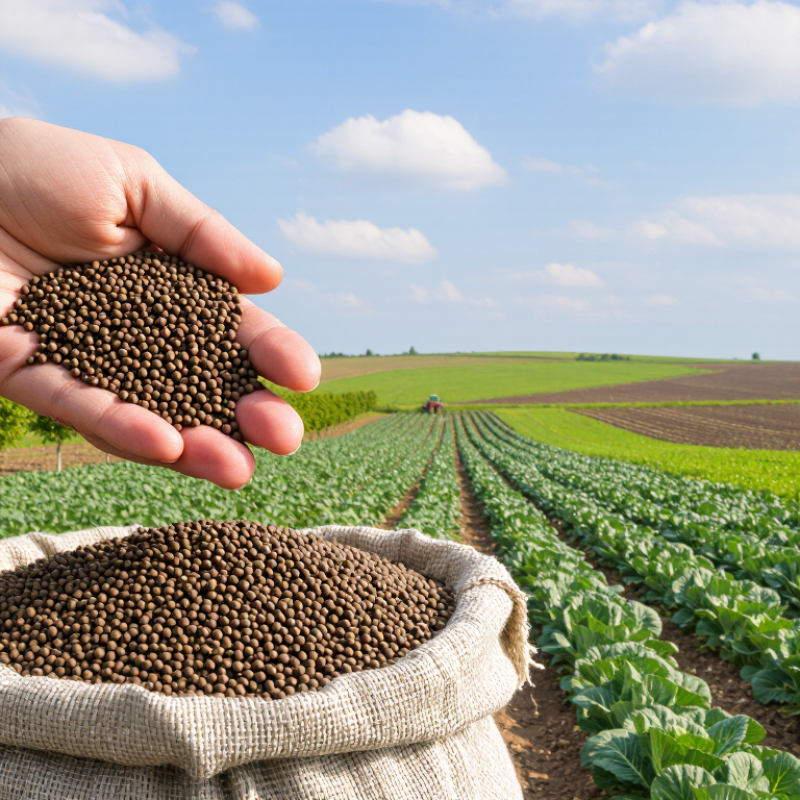
Unlike liquid products, granules are easier to store, measure, and transport over long distances. A dry bag can travel through varied climates with fewer leakage concerns. Farmers can spread it across vegetable beds, orchards, turf, or broad-acre fields. The granules also fit established fertiliser routines. That matters to distributors serving different farming systems.
Professor John S. Craigie, a respected seaweed biostimulant researcher, has stated, “Seaweed extracts are biostimulants, not miracle cures.” This warning is important. Granular Seaweed Fertiliser should support sound soil management, not replace testing, balanced nutrition, or responsible agronomy.
Its value depends on more than the seaweed source. Buyers should examine species, processing conditions, granule uniformity, moisture content, nutrient declarations, and batch consistency. Clear documentation builds confidence. Independent testing helps confirm what the label promises.
Still, no product performs perfectly everywhere. Soil texture, rainfall, crop variety, and application timing can change results. A granule that performs well in coastal vegetable fields may need adjustment in dry inland soils. That limitation deserves honest attention.
For international purchasers, the strongest advantage is practical reliability. Granular Seaweed Fertiliser can simplify logistics while offering a recognizable seaweed-based input. With transparent specifications and realistic claims, it becomes easier to compare suppliers, manage risk, and support responsible crop production. The opportunity is promising. The evidence must remain stronger than the marketing.
Seaweed Fertiliser Defined: From Marine Biomass to Granular Product
Why Is Granular Seaweed Fertiliser Ideal for Global Buyers?
Seaweed fertiliser begins with marine biomass, not a factory-made chemical formula. Harvested algae are washed, dried, milled, and sometimes extracted before granulation. The final granules may contain seaweed meal, concentrated extract, or both. Their colour can range from olive green to deep brown.
The FAO’s 2024 State of World Fisheries and Aquaculture report recorded 36.9 million tonnes of aquatic algae production in 2022. This large resource supports regional supply chains, but raw seaweed is bulky and moisture-sensitive. Granulation improves handling, flowability, and application accuracy. A dry granule also travels more efficiently than wet biomass. However, quality is not automatically consistent. Species, harvest season, drying temperature, and salt removal can change nutrient and bioactive levels. Buyers should request batch data, not rely on appearance.
Tips: Check moisture, particle size, organic matter, potassium, alginate content, and contaminant testing. Ask for a certificate of analysis and clear application rates. The International Fertilizer Association stresses nutrient stewardship, so buyers should match granules with soil tests and crop needs. Start with a small field trial. It may reveal uneven spreading, slow dissolution, or unexpected soil responses. That practical evidence matters more than polished claims.
FAO Reports Over 35 Mt of Farmed Seaweed: A Stable Supply Base
FAO’s The State of World Fisheries and Aquaculture 2024 reports more than 35 million tonnes of farmed seaweed production. The figure refers to 2022 global output and confirms a substantial raw-material base. Most production comes from established coastal farming systems in Asia. This geographic concentration supports regular procurement, but it also creates exposure to storms, disease, and local policy changes.
For global buyers, granular seaweed fertiliser offers practical handling advantages. Uniform granules are easier to weigh, pack, store, and distribute than wet extracts. They also reduce shipping water and simplify application through standard spreading equipment. The OECD-FAO Agricultural Outlook 2023–2032 identifies continuing growth in aquatic production, reinforcing long-term interest in marine biomass inputs. Granulation can help convert that biomass into a more consistent agricultural format.
Consistency is never automatic. Mineral content, species, drying temperature, and harvest season can change the final product. Buyers should request batch testing for moisture, organic matter, nutrient levels, and contaminants. The FAO data shows scale, not perfect uniformity. That distinction matters. A stable supply base still needs careful sourcing, traceability, and realistic specifications. Some buyers may expect rapid crop responses, yet seaweed fertiliser usually works through gradual soil and plant support rather than instant nutrient replacement.
Granulation Benefits: 2–4 mm Particles, Lower Dust, Easier Logistics
Granular seaweed fertiliser is becoming practical for buyers who manage long-distance supply chains. The 2–4 mm particle size gives the product a more consistent physical form. It also helps workers measure and distribute material with fewer irregular clumps. The difference is visible. Bags usually pour more smoothly, especially through manual spreaders and simple loading equipment.
Lower dust is another important advantage during filling, stacking, and field application. Fine powder can settle on floors, pallets, and protective clothing. Granules can reduce this nuisance when production and packaging are properly controlled. They may also limit product loss during transfer between conveyors, bags, and storage bins. However, dust still happens. Humidity, rough handling, and weak granule strength can change performance.
For global buyers, easier logistics can influence the total landed cost. Uniform particles often improve pallet stability and make container loading more predictable. They can also reduce bridging inside hoppers, although equipment design still matters. A responsible supplier should provide size distribution, moisture data, breakage rates, and batch testing records. Buyers should inspect samples after transport, not only before shipment. A 2–4 mm specification sounds precise, but real batches may include smaller or larger particles. That variation deserves honest review.
Why Is Granular Seaweed Fertiliser Ideal for Global Buyers? - Granulation Benefits: 2–4 mm Particles, Lower Dust, Easier Logistics
| Evaluation Dimension | Granular Seaweed Fertiliser | Fine Powder Reference | Practical Benefit for Global Buyers |
| Particle size | 2–4 mm granules | Typically below granule size; exact range depends on milling and screening | A defined size range supports more consistent spreading and easier product specification. |
| Particle-size control | Can be screened to a stated 2–4 mm specification | May contain a broader distribution of fine particles | Makes incoming inspection, batch comparison, and application-rate planning simpler. |
| Dust generation | Generally lower dust potential than fine powder when granules remain intact and dry | Fine particles are more readily dispersed during pouring, conveying, and spreading | Cleaner warehouse handling and improved operator comfort; actual dust depends on formulation and abrasion. |
| Flowability | Usually better free-flowing when properly dried and protected from moisture | Fine powders can bridge, compact, or become difficult to dose under humid conditions | Supports smoother filling, dosing, and mechanical spreading. |
| Application compatibility | Suitable for manual broadcasting and many granular fertilizer spreaders, subject to equipment settings | More commonly handled by hand or through powder-compatible equipment | Expands the range of practical application methods for farms and distributors. |
| Packaging formats | Commonly packed in sealed bags or flexible intermediate bulk containers, depending on buyer requirements | Also available in bags or bulk packaging, but fine material may require stronger moisture and dust controls | Flexible packaging options help serve retail, agricultural, and bulk-import channels. |
| Storage sensitivity | Should be stored sealed, dry, and away from condensation to reduce caking and granule breakdown | Fine powders are also moisture-sensitive and may cake more readily | Clear moisture-control requirements support more reliable storage during international transit. |
| International logistics | More convenient for automated filling, palletising, loading, and controlled discharge | May require additional controls against dust, compaction, and leakage during handling | Can reduce handling complexity across warehouses, ports, distributors, and farms. |
| Quality-control data to request | Particle-size distribution, moisture, bulk density, granule strength, dust tendency, and nutrient analysis | Particle-size distribution, moisture, bulk density, dust tendency, and nutrient analysis | A product specification and certificate of analysis help buyers compare batches objectively. |
Note: The 2–4 mm range is a product specification target. Dust, flowability, bulk density, granule strength, and nutrient content vary by raw material, binder, drying process, storage conditions, and local fertiliser regulations.
Nutrient Evidence: Potassium, Alginates, and Biostimulants in Crop Trials
Why Is Granular Seaweed Fertiliser Ideal for Global Buyers?
Granular seaweed fertiliser attracts global buyers because it combines practical handling with evidence-based crop nutrition. Potassium supports water regulation, stem strength, and fruit development. However, its value depends on the actual analysis, not the seaweed label alone. Crop trials often show improved early growth when potassium is balanced with nitrogen and micronutrients. Results still vary by soil, crop, climate, and application rate.
Alginates may improve soil structure by supporting moisture retention and aggregation. They are not a replacement for irrigation or sound soil management.
Seaweed-derived biostimulants can influence root growth, nutrient uptake, and stress responses. Trial evidence remains promising, but some studies use small plots or short seasons. That limitation deserves attention.
Independent testing, replicated trials, and clear control treatments make claims more reliable.
Tips: Ask for potassium content, alginate levels, moisture limits, and particle-size data. Check whether trials used your target crop and climate. Begin with a small field comparison. Record plant height, root condition, yield, and soil moisture. Granules should spread evenly and resist excessive dust during transport. Global buyers also need consistent batches, traceable raw materials, and storage guidance. A product can look convenient in a warehouse, yet perform unevenly after humid shipping. That is an overlooked risk.
Global Buyer Checklist: EU 2019/1009, Quality Tests, and Traceability
Granular seaweed fertiliser suits global buyers because it travels efficiently, stores cleanly, and applies with standard spreading equipment.
FAO’s 2024 fisheries report recorded 36.3 million tonnes of aquatic algae production in 2022. That scale increases the need for consistent sourcing and documentation.
EU Regulation 2019/1009 should guide every purchasing checklist. If the product enters the EU fertilising-products route, buyers should verify its Product Function Category, Component Material Category, conformity assessment, label, and contaminant limits.
Seaweed biostimulant claims also need suitable evidence, not attractive wording alone. Test before shipment. Ask for batch results covering moisture, pH, electrical conductivity, nutrient content, particle-size distribution, and relevant contaminants, including arsenic, cadmium, lead, mercury, and pathogens where applicable.
Granules should also resist excessive dust and crushing during handling.
Traceability must reach beyond the factory gate. Records should identify the seaweed species, harvest zone, harvest date, drying conditions, additives, production line, and final lot code.
A retained sample can reveal whether a complaint concerns raw material or processing. That matters during long-distance trade.
A certificate may look complete, yet uneven granule size can still cause poor field distribution. This is an uncomfortable weakness. Buyers should review it.
FAO’s production figures show why traceability cannot rely on informal supplier statements. Independent laboratory testing and documented corrective actions provide stronger evidence of reliability.