2026 Top Trends in Machine Vision Inspection Technology?
Machine Vision Inspection technology is rapidly evolving. By 2026, it promises to bring significant innovation across various industries. This technology utilizes advanced algorithms and sophisticated imaging systems to enhance quality control processes.
One prominent trend is artificial intelligence integration. AI-driven machine vision systems will adapt in real-time. They will learn from previous inspections, improving accuracy. Another trend is increased use of multispectral imaging. This allows detection of defects unseen by standard methods. As a result, industries like manufacturing and food processing will benefit greatly.
However, challenges remain. Many companies struggle to implement these technologies. Limited knowledge and high initial costs can create obstacles. Moreover, there is a need for ongoing training to ensure proper use. As advancements continue, a careful approach will be crucial for successful adoption.
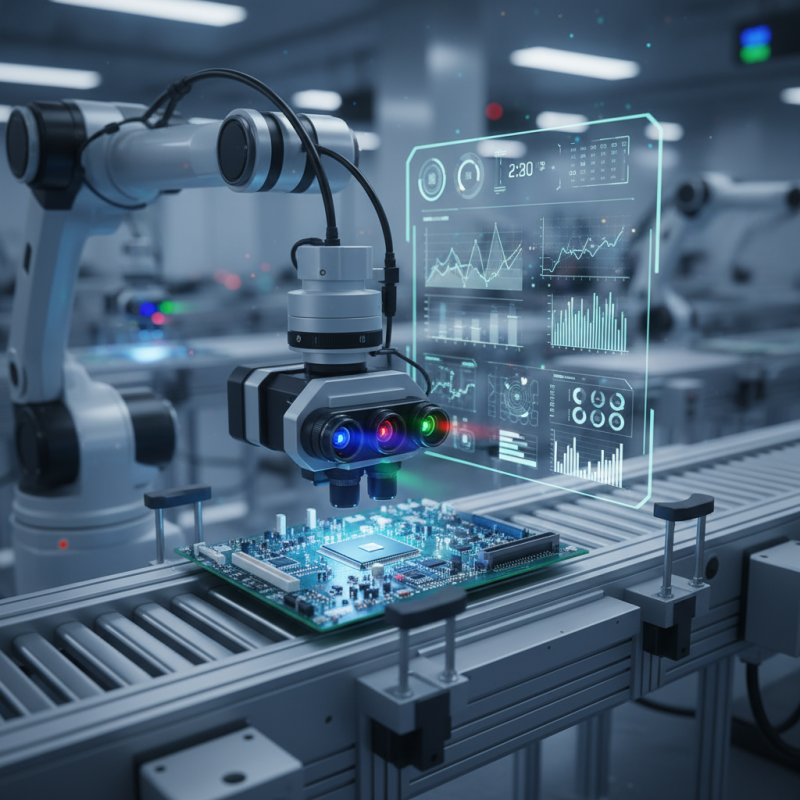
Emergence of AI and Deep Learning in Machine Vision Inspection
In recent years, artificial intelligence and deep learning have integrated into machine vision inspection. This synergy enhances quality control in manufacturing. Traditional vision systems rely on preset rules. They struggle with complex scenarios. AI enables systems to learn from data, adapting to new challenges. It reduces the need for manual calibration.
Deep learning algorithms excel at recognizing patterns. They can identify defects more accurately than standard methods. However, training these models requires vast amounts of data. Ensuring data quality is critical. Poor data can lead to incorrect insights or missed defects. Not every scenario is addressed by current models, making continuous improvement necessary.
The shift towards AI is exciting but presents challenges. Implementing these technologies can be resource-intensive. Companies may face integration issues with legacy systems. Moreover, understanding deep learning's capabilities requires specialized knowledge. Stakeholders must invest time in training and education. As the technology evolves, so must our approaches and expectations.
Advancements in Imaging Sensors for Enhanced Inspection Accuracy
In 2026, advancements in imaging sensors will redefine machine vision inspection technology. New sensor designs will focus on improving the accuracy and speed of inspections. These enhancements will leverage better light sensitivity, allowing for clearer images in various environments. High-resolution sensors will capture intricate details, which is crucial for quality control.
Developers are exploring innovative materials for sensor construction. Improved algorithms will also play a critical role in processing images faster. However, not all solutions will perfectly meet industry needs. Some sensors may still struggle in complex lighting conditions, leading to missed defects. Such challenges highlight the ongoing need for refinement in this technology.
Integration of machine learning with imaging systems promises exciting possibilities. These systems can adapt and learn from each inspection cycle. Yet, reliance on algorithms also raises concerns about overfitting to specific conditions. Balancing these advances with practical applications will be essential for future success.
2026 Trends in Machine Vision Inspection Technology
Integration of 3D Vision Technologies in Quality Control Processes
The rise of 3D vision technologies is transforming quality control processes in manufacturing. Industry reports suggest that by 2026, the market for machine vision solutions will surpass $20 billion. As companies look to enhance inspection accuracy, integrating these advanced technologies becomes vital. Traditional 2D systems fail to capture depth information. This lack of precision can lead to quality issues.
Adopting 3D machine vision allows for detailed profiling of parts. For example, systems can measure dimensions and detect defects that 2D inspections might miss. A recent study indicated that using 3D inspection could improve defect detection rates by over 30%. However, implementing such technologies presents challenges. Initial setup costs and training requirements can be significant. Companies may struggle to find skilled workers who understand these systems. This can slow down integration, leading to half-implemented solutions that do not realize their full potential.
Manufacturers also face data overload. The abundance of information from 3D systems requires efficient data processing techniques. Without the right software, the benefits of increased data may be lost. Balancing technology investment with workflow efficiency is crucial. Finding this balance can be difficult, but it is necessary to avoid stagnation in quality control processes.
Real-Time Data Processing and Analytics in Machine Vision Systems
The rise of real-time data processing in machine vision systems is transforming industries. According to the latest report by Market Research Future, the global machine vision market is expected to grow at a CAGR of 8.4% by 2026. This growth underscores the demand for accurate inspection technologies that can analyze data instantly. Factories now utilize cameras equipped with advanced algorithms to detect defects on assembly lines without delays.
Real-time analytics can significantly enhance quality control. Recent studies show that defects can be caught before they leave the production line, reducing waste and costs. Systems that process data on the fly allow manufacturers to make immediate adjustments. This feedback loop is crucial, yet it’s often challenging. The integration of these technologies requires skilled personnel who can interpret data efficiently. A gap in expertise remains, reflecting a need for better training programs in the field.
Despite advancements, challenges persist. Not all systems can seamlessly process vast amounts of data in real time. Some still face lag issues that can lead to missed errors. Regular updates and maintenance can alleviate some of these problems. Stakeholders must prioritize continuous improvement to fully harness the potential of real-time analytics in machine vision. Embracing this approach could reshape how industries ensure product quality.
Increasing Adoption of Machine Vision in Automated Manufacturing Solutions
Machine vision technology is gaining traction in automated manufacturing. Its capability to detect defects and ensure quality is unparalleled. Factories are now incorporating cameras and sensors to monitor processes in real-time. This shift is changing how products are produced.
The benefits are evident. Manufacturers enjoy increased efficiency and reduced waste. Mistakes are caught early, saving time and resources. However, not every implementation is flawless. Some systems struggle with complex shapes or varying lighting conditions. Adjustments are often required to optimize performance. Customization is key to success.
Adoption is accelerating, but challenges remain. Staff training is crucial to fully utilize these systems. Additionally, integrating machine vision with existing processes can be tricky. Companies must carefully evaluate their needs. They should remain open to evolving technologies. Embracing these trends can lead to significant benefits in the long run.
2026 Top Trends in Machine Vision Inspection Technology
| Trend | Description | Impact on Manufacturing | Adoption Rate (%) |
| AI Integration | Utilizing artificial intelligence to improve defect detection rates. | Enhanced accuracy and reduced false positives in inspection. | 85% |
| 3D Vision Systems | Adoption of 3D imaging technology for complex inspection tasks. | Improved ability to detect flaws in multi-dimensional objects. | 75% |
| Smart Cameras | Integration of processing power within cameras for real-time analysis. | Decrease in latency for defect detection. | 70% |
| Edge Computing | Processing data closer to the source to reduce bandwidth issues. | Faster decision-making in manufacturing systems. | 60% |
| Cloud-Based Solutions | Utilizing cloud computing for storing and analyzing inspection data. | Scalability and remote access for data analysis. | 65% |