Top Food Packaging Suppliers for Global Buyers

Selecting reliable food packaging suppliers is a practical decision for global buyers. It affects product safety, shelf life, brand presentation, and delivery costs. A supplier may offer attractive prices, yet weak quality control can create expensive delays. The best partners provide consistent materials, clear documentation, and responsive communication across borders.

This guide examines suppliers that serve different packaging needs, including pouches, cartons, trays, bottles, and flexible films. It considers food-contact materials, printing quality, minimum order quantities, production capacity, and shipping support. Buyers should also review certifications, factory audits, sample results, and testing procedures. A package may look excellent under showroom lighting but fail during freezing, stacking, or long-distance transport. Small details matter. Seal strength matters. Ink migration matters.

The phrase “food with packaging” reflects a simple commercial reality: the product and its container must work together. Experienced purchasing teams test packaging with the actual food, not only empty samples. They check moisture, oil resistance, odor transfer, and temperature performance. Supplier claims deserve verification. Even established manufacturers can make mistakes, especially when specifications change quickly. This overview aims to support careful comparison through practical criteria and transparent observations. It does not treat one supplier as perfect. Instead, it highlights strengths, limitations, and questions worth asking before signing a contract. Reliable sourcing requires evidence, patience, and occasional reconsideration.

Top Food Packaging Suppliers for Global Buyers

What Defines a Global Food Packaging Supplier

Top Food Packaging Suppliers for Global Buyers

What Defines a Global Food Packaging Supplier

A global food packaging supplier offers more than cartons, films, or containers. It manages food-contact safety, stable quality, documentation, and delivery across borders. In practice, buyers should request migration testing, batch records, allergen controls, and traceability exercises. One missing certificate can delay an entire shipment.

Reliable suppliers connect packaging design with food protection. The FAO estimates that 13.2% of food is lost between harvest and retail. Suitable packaging can reduce damage, moisture loss, and contamination during transport. However, packaging is not a complete solution. The OECD reports that packaging represents about 40% of global plastic use. This makes material efficiency and realistic recycling claims essential. A supplier promising “fully recyclable” materials may still overlook local collection systems. That deserves questioning.

Tips: Ask for samples from several production batches. Test sealing performance after refrigeration, stacking, and long-distance shipping. Check whether the supplier can explain its data, not merely display certificates. Short answers can reveal weak systems. Also compare minimum order quantities, backup production sites, and customs documents. A lower unit price may hide higher waste, delays, or rejected goods. Reliable global supply is measurable, but never perfect.

Key Packaging Materials and Product Categories

Top Food Packaging Suppliers for Global Buyers
Key Packaging Materials and Product Categories

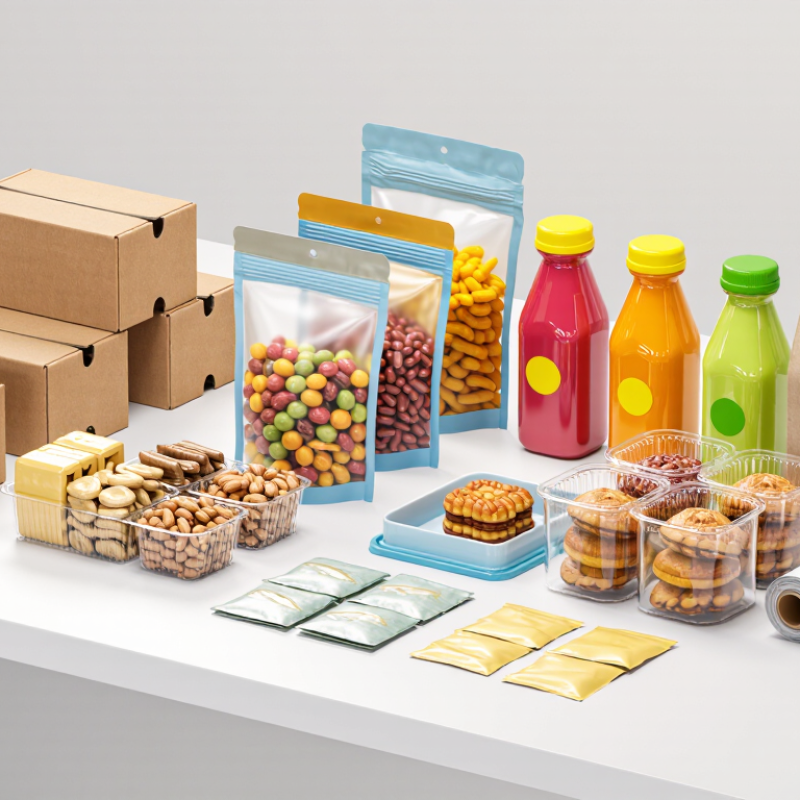
Food packaging choices should match the product, filling process, transport route, and shelf-life target. Flexible films suit snacks, frozen foods, and dry ingredients. They are lightweight and efficient, but punctures can occur during handling. Stand-up pouches often include resealable closures, while sachets support single-use portions.

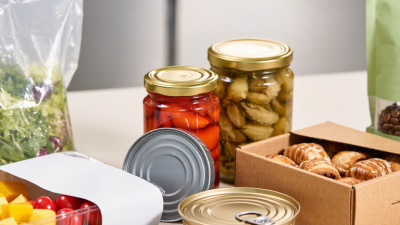
Rigid packaging includes plastic tubs, trays, bottles, glass jars, and metal cans. These formats provide stronger protection and easier stacking. Paperboard cartons add printable surfaces for product information and retail presentation. However, paper structures may require coatings against moisture or grease. Buyers should request material specifications, barrier data, seal-strength results, and food-contact documentation. Traceability matters.

Tips: Test before scaling. Ask for samples from the same production line. Check seal performance after cold storage, heat exposure, and vibration. Confirm dimensions with your filling equipment. Review recycled content claims and disposal guidance for each market. A cheaper package can create higher waste or damage costs. I have seen attractive designs fail because the closure was difficult to use. Details matter. Suppliers should also explain minimum order quantities, lead times, quality controls, and corrective-action procedures. Packaging performance is never guaranteed by appearance alone.

How to Evaluate Suppliers for International Purchasing

Top Food Packaging Suppliers for Global Buyers
How to Evaluate Suppliers for International Purchasing

Choosing a food packaging supplier requires more than comparing unit prices. Request material specifications, production capacity, and recent quality records. A reliable supplier should explain where raw materials come from and how each batch is traced. Ask for food-contact test reports that match your destination market. Documents should carry clear dates, testing methods, and responsible laboratories.

Inspect samples under real conditions. Fill pouches with oily products, stack cartons in humid storage, and check seals after transport simulation. Small defects often appear after pressure, heat, or vibration. A video call cannot replace an independent factory audit. During the visit, observe hygiene controls, pest prevention, worker training, and rejected-material handling. Clean floors help, but process records matter more.

Confirm minimum order quantities, lead times, payment terms, and shipping responsibilities in writing. Clarify whether prices include tooling, printing plates, inspections, or export packaging. A low quote may hide expensive setup charges. Check whether the supplier can maintain color, thickness, and dimensions across repeated orders. Ask for a corrective-action report when problems occur. Silence is not reassurance.

Do not rely on polished presentations. A strong supplier may still miss a deadline or provide unclear updates. Build a trial order with measurable acceptance criteria. Keep inspection photos, approved samples, and communication records. Reassess performance after delivery, not only before signing.

Quality, Safety, and Regulatory Compliance Standards

Food packaging suppliers serving global buyers must treat safety as a daily process, not a certificate on a wall. Experienced buyers inspect material specifications, production hygiene, and traceability records before approving a shipment. A reliable supplier should provide food-contact declarations, migration test reports, and current certificates from qualified laboratories. These documents must match the actual packaging material, ink, adhesive, and intended food use.

Details matter. A sealed carton should carry a clear lot code, production date, and storage guidance. Flexible packaging needs strong seals that survive transport, humidity, and temperature changes. Paper-based materials require careful review of coatings and recycled content. Suppliers should operate documented hygiene controls, pest management, allergen awareness, and calibrated testing equipment. They also need procedures for handling complaints and product recalls.

Regulatory requirements differ between markets. Buyers should confirm applicable limits for chemical migration, heavy metals, labeling, and recycled materials before production begins. Supplier audits can reveal practical weaknesses, such as damaged pallets or incomplete cleaning logs. No audit is perfect. I have seen well-organized facilities miss small record gaps that later created avoidable delays. That is why independent testing and shipment-level verification remain valuable. Quality teams should review certificates of analysis, inspect samples, and retain reference pieces from each lot. Clear communication helps, but written evidence protects decisions.

Top Food Packaging Suppliers for Global Buyers - Quality, Safety, and Regulatory Compliance Standards
Evaluation Dimension Global Buyer Requirement Relevant Standard or Regulation Typical Evidence to Request Applicable Materials or Products Verification Priority
Food-Contact Safety Materials must not transfer substances to food at levels that could endanger health or create unacceptable changes in food composition, taste, or odor. EU Regulation (EC) No 1935/2004; U.S. food-contact requirements under applicable sections of Title 21 CFR. Food-contact declaration, material specification, intended-use statement, and supporting migration-test report. Plastic, paper and board, coatings, adhesives, inks, glass, metal, and multilayer structures. Required
Plastic Compliance Plastic components should use permitted substances and meet applicable overall and specific migration limits for the intended food and temperature conditions. EU Regulation (EU) No 10/2011, including applicable amendments; relevant U.S. 21 CFR provisions. Declaration of compliance, formulation or substance-use statement, migration test results, and conditions of use. PE, PP, PET, PS, PVC, polyamide, multilayer plastic films, trays, bottles, and closures. Required
Good Manufacturing Practice Production must be controlled to ensure packaging is consistently suitable for food contact and traceable through defined manufacturing processes. Commission Regulation (EC) No 2023/2006 for food-contact materials manufactured for the EU market. GMP policy, quality manual, process-control records, hygiene procedures, internal-audit records, and corrective-action reports. All food-contact packaging materials and articles. Required
U.S. Market Access Each food-contact substance and packaging component must have an applicable regulatory basis for the intended use in the United States. Applicable sections of 21 CFR, food-contact notifications, effective prior-sanctioned uses, or other legally recognized authorizations. Regulatory status statement, supplier compliance letter, formulation review, and test data where applicable. Polymers, additives, coatings, adhesives, paper chemicals, colorants, and processing aids. Required
China Market Access Food-contact materials and articles must comply with the applicable national food-safety standards and permitted-use requirements. Applicable GB 4806 series standards, including material-specific standards and general safety requirements. Chinese food-contact compliance declaration, test report from a qualified laboratory, material composition statement, and intended-use details. Plastic, rubber, paper and board, coatings, adhesives, metal, glass, ceramics, and composite materials. Required
Migration Testing Testing should reflect the packaged food type, contact duration, temperature, surface-area-to-volume ratio, and worst reasonably foreseeable use. Applicable regional test methods, including EU food-simulant procedures and recognized laboratory methods. Accredited laboratory report, test conditions, food simulants, detection limits, sample identification, and result interpretation. Films, rigid containers, lids, coatings, laminates, closures, and printed packaging. Required
Chemical Restrictions Suppliers should control substances restricted or scrutinized in the target market, including heavy metals, certain fluorinated substances, and other regulated chemicals. Applicable national chemical and food-contact legislation; customer restricted-substance lists where contractually required. Restricted-substance declaration, chemical screening results, supplier declarations, and change-control records. Paper and board, coatings, inks, molded plastics, textiles, and barrier materials. Recommended
Packaging Hygiene Packaging must be protected from contamination during raw-material handling, production, storage, and shipment. Food-contact GMP principles and documented hygiene-control procedures. Hygiene risk assessment, environmental-monitoring records where relevant, pest-control records, cleaning schedules, and employee training records. Primary packaging, food-contact liners, cups, pouches, trays, and closures. Required
Traceability Each production lot should be traceable to raw materials, manufacturing records, inspection results, and shipment documentation. Applicable food-safety management and product-traceability requirements in the destination market. Lot coding system, certificate of analysis, batch records, delivery records, and mock-recall results. All primary and secondary packaging supplied for food applications. Required
Mechanical Performance Packaging should maintain integrity during filling, sealing, stacking, transport, handling, and consumer use. Buyer-approved specifications and applicable packaging performance test methods. Seal-strength test, burst or pressure test, puncture test, drop test, compression test, and dimensional inspection report. Flexible pouches, bags, bottles, jars, trays, cartons, and transport packaging. Required
Barrier Performance Barrier properties should match the product's sensitivity to oxygen, moisture, light, aroma, and grease throughout the stated shelf life. Product-specific technical specification and validated shelf-life requirements. Oxygen transmission rate, water-vapor transmission rate, light-transmission data, grease-resistance testing, and shelf-life validation. Multilayer films, high-barrier pouches, beverage containers, snack packaging, and frozen-food packaging. Buyer Check
Label and Printing Safety Printing inks, varnishes, and adhesives should be suitable for the structure and controlled to prevent unacceptable transfer to food. Applicable food-contact rules, GMP requirements, and industry guidance for printed food packaging. Ink and adhesive declarations, set-off assessment, migration or transfer testing, curing records, and approved artwork specification. Printed films, cartons, labels, sleeves, pouches, and coated paperboard. Required
Recycled Content Recycled materials must be suitable for the intended food-contact use and meet applicable decontamination, purity, and traceability requirements. Applicable recycled-plastic and recycled-material requirements in the destination market. Recycled-content declaration, source-control records, decontamination validation where applicable, and migration data. Recycled PET, recycled polyolefins, recycled paperboard, and other recycled-content structures. Buyer Check
Sustainability Data Environmental claims should be supported by defined scopes, measurement methods, and evidence rather than unsupported marketing statements. Applicable environmental-claim rules, packaging-waste legislation, and customer sustainability requirements. Material-weight breakdown, recycled-content evidence, life-cycle data, recyclability assessment, and packaging-reduction calculations. All packaging formats, especially multilayer and disposable packaging. Recommended
Quality Management Suppliers should operate documented controls for specifications, nonconforming products, corrective actions, calibration, and customer complaints. ISO 9001 or an equivalent documented quality-management system may be used as supporting evidence. Valid certificate, audit report, inspection plan, control plan, nonconformance records, and corrective-action history. All food-packaging products and manufacturing processes. Recommended
Change Notification Material, formulation, process, site, tooling, and approved-subcontractor changes should be communicated before implementation. Contractual quality requirements and food-contact change-control expectations. Change-control procedure, notification timetable, requalification plan, updated declaration, and revised test reports. All packaging materials, components, and production sites. Required
Documentation Package A complete technical file should allow the buyer to verify regulatory status, product performance, manufacturing controls, and shipment traceability. Destination-market requirements and buyer quality agreements. Specification sheet, technical data sheet, declaration of compliance, certificate of analysis, test reports, SDS where relevant, and lot records. All food-contact packaging formats. Required

Logistics, Sustainability, and Long-Term Supplier Selection

Top Food Packaging Suppliers for Global Buyers

Global buyers should evaluate suppliers beyond unit price. The World Bank’s What a Waste 2.0 report projects municipal solid waste to reach 3.40 billion tonnes by 2050, compared with 2.01 billion tonnes in 2016. Packaging choices now affect freight, storage, and disposal costs. I recommend checking pallet efficiency, container utilization, and documented lead times before signing a long contract. A supplier with factories near major ports may reduce transit risk, but one port is not enough. Weather delays happen.

Sustainability claims require evidence. The OECD’s Global Plastics Outlook estimates that packaging created about 142 million tonnes of plastic waste in 2019, nearly 40% of total plastic waste. Ask for material specifications, recycled-content records, food-contact compliance documents, and lifecycle assessment boundaries. “Recyclable” can sound impressive. It may still fail where collection systems are weak. Suppliers should explain actual recovery conditions, not only laboratory performance.

Long-term selection should include sample testing, batch traceability, complaint response times, and backup production capacity. Track on-time delivery, defect rates, and forecast flexibility for at least three purchase cycles. The Sustainable Packaging Coalition notes that packaging decisions should consider the full system, including sourcing, use, and end-of-life management. I would also review a supplier annually. A strong audit today does not guarantee stable performance tomorrow.