


10 Best Food Processing Machinery Manufacturers Worldwide
Choosing the right food processing machinery manufacturer can shape a factory’s safety, efficiency, and long-term costs. This guide examines ten influential companies serving processors worldwide.
The comparison goes beyond machine size or brand recognition. It considers hygienic design, production capacity, energy use, automation, maintenance access, and technical support. A stainless-steel conveyor may look simple, yet its weld quality and cleaning design can affect daily sanitation. A high-speed filling line may increase output, but it can also create costly downtime when spare parts are unavailable.
Food engineering scholar R. Paul Singh has stated, “Food processing is the transformation of raw materials into food products.” That transformation requires more than powerful equipment. It depends on controlled temperature, consistent pressure, reliable sensors, and trained operators. These details matter when processing milk, vegetables, meat, bakery products, or ready-to-eat meals.
No ranking fits every factory. A large multinational may suit an automated beverage plant, while a regional manufacturer may better serve a smaller processor. This is where the selection becomes difficult. Published specifications do not always reveal cleaning time, service response, or real operating performance.
The manufacturers discussed here are evaluated through an experience-based and evidence-conscious lens. Their equipment portfolios, engineering capabilities, industry reputation, and support networks receive careful attention. Some conclusions remain open to review. Market conditions change, technologies improve, and customer needs differ. Readers should still verify certifications, installation requirements, lifecycle costs, and local service coverage before making a purchase decision.
Definition and Scope of Food Processing Machinery Manufacturing
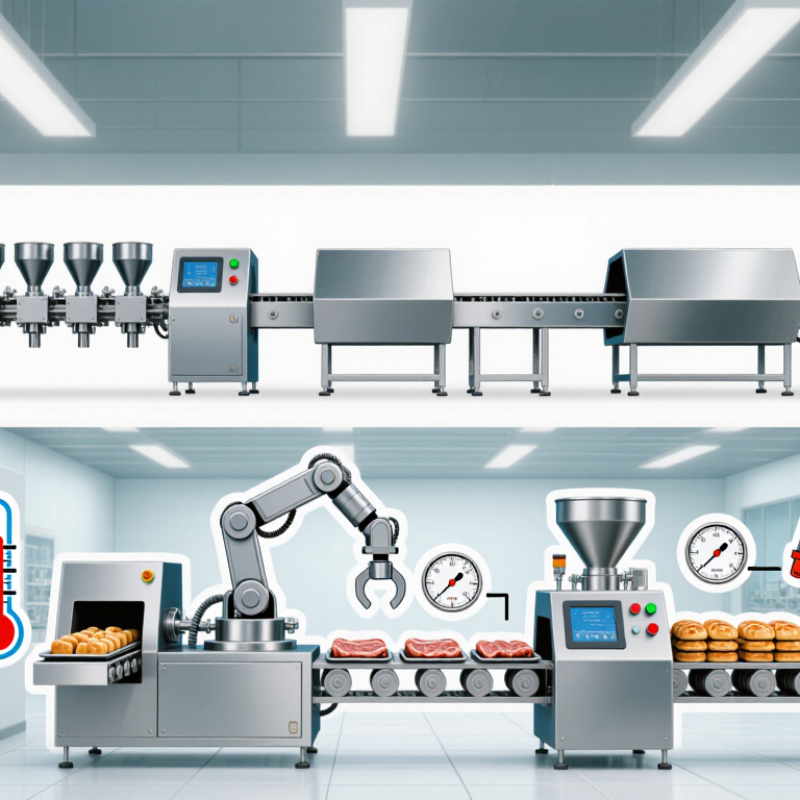
Food processing machinery manufacturing covers the equipment that converts agricultural ingredients into safe, consistent, market-ready foods. Its scope includes washing, sorting, cutting, mixing, cooking, cooling, filling, packaging, and inspection systems. It also covers machine design, fabrication, automation, sanitation, validation, and maintenance support.
The boundary is not always clean. A packaging unit may belong to food machinery, industrial automation, or packaging equipment, depending on the report. MarketsandMarkets estimated the global food processing equipment market at about USD 52 billion in 2023, with growth toward USD 69 billion by 2028. Such figures show expanding demand, but definitions vary between studies. Buyers should check whether installation services and packaging systems are included.
Food machinery manufacturers now face tighter performance expectations. Equipment must deliver stable throughput while limiting water, energy, product loss, and cleaning time. The FAO’s 2019 State of Food and Agriculture report estimated that 14% of food is lost between harvest and retail. Better grading, cold-chain handling, and process control can reduce part of this loss. Not all of it.
In practice, a reliable machine needs more than a high-speed specification. Hygienic welds, tool-free access, clear sensors, and traceable maintenance records matter on a busy production floor. The ISO 22000 framework also reinforces the importance of controlled food-safety processes. Yet energy efficiency is still reported inconsistently. This weakness deserves closer industry attention.
| Rank | Machinery Manufacturing Segment | Primary Processing Function | Typical Throughput Range | Common Food Applications | Key Hygienic Design Features | Common Technical Standards or Design References | Typical Automation and Control Features |
|---|---|---|---|---|---|---|---|
| 1 | Industrial Mixing and Blending Equipment | Combines dry, liquid, or semi-solid ingredients to achieve uniform composition and consistent texture. | 50–10,000 kg per batch | Bakery mixes, sauces, dairy products, beverages, confectionery, seasonings, and prepared foods. | Stainless-steel product-contact surfaces, cleanable vessel geometry, hygienic seals, low-dead-zone agitators, and optional vacuum operation. | Food-contact materials requirements; hygienic design principles from EHEDG and 3-A Sanitary Standards where applicable. | Programmable batch recipes, variable-speed drives, load cells, temperature monitoring, and automated ingredient dosing. |
| 2 | Industrial Cutting, Slicing, and Dicing Machinery | Reduces food products to controlled slice, strip, cube, or portion dimensions. | 100–10,000 kg per hour | Meat, poultry, cheese, vegetables, fruit, bakery products, and ready meals. | Tool-free access, corrosion-resistant stainless steel, guarded cutting zones, drainage-friendly frames, and removable product-contact components. | HACCP-based sanitation programs, food-contact material rules, and applicable machine-safety requirements. | Servo-controlled blade speed, programmable portion dimensions, product sensors, interlocked guards, and production counters. |
| 3 | Thermal Processing and Cooking Systems | Applies controlled heat through steaming, boiling, baking, frying, roasting, pasteurization, or sterilization. | 100–20,000 kg per hour | Canned foods, sauces, soups, vegetables, meat products, seafood, bakery goods, and shelf-stable meals. | Insulated surfaces, hygienic welds, condensate management, clean-in-place capability, and controlled product residence time. | HACCP validation, thermal-process lethality studies, applicable retort and pressure-vessel requirements, and food-safety regulations. | PLC and HMI control, multi-zone temperature regulation, data logging, pressure monitoring, and alarm management. |
| 4 | Drying and Dehydration Equipment | Removes moisture to improve shelf life, reduce weight, or create powders and dried ingredients. | 20–5,000 kg of water removed per hour | Milk powder, coffee, fruit, vegetables, herbs, grains, meat snacks, starches, and functional ingredients. | Enclosed airflow paths, cleanable chambers, filtered air supply, corrosion-resistant construction, and controlled condensate discharge. | Food-contact material requirements, validated moisture-control procedures, and hygienic airflow design practices. | Automatic temperature and humidity control, airflow adjustment, moisture sensors, recipe storage, and energy monitoring. |
| 5 | Filling, Dosing, and Portioning Machinery | Dispenses accurate quantities of liquids, powders, granules, pastes, or particulates into containers or packages. | 20–600 containers per minute | Beverages, dairy products, sauces, edible oils, powders, snacks, pet food, and pharmaceutical-style nutrition products. | Sanitary dosing valves, smooth product paths, drip-control systems, quick-change parts, and minimal product retention. | Food-contact material regulations, hygienic design guidance, and relevant packaging-machine safety requirements. | Servo-driven dosing, checkweighing, fill-volume feedback, no-container/no-fill logic, and automatic reject systems. |
| 6 | Packaging and Sealing Machinery | Forms, fills, seals, wraps, l・aminates, or closes packages to protect products during storage and distribution. | 30–1,200 packs per minute | Fresh foods, frozen foods, snacks, bakery products, meat, seafood, confectionery, and ready-to-eat meals. | Washdown-compatible construction, protected electrical cabinets, accessible sealing areas, controlled air pressure, and hygienic conveyor design. | Packaging-material compliance, HACCP requirements, machine guarding standards, and applicable modified-atmosphere packaging practices. | Film registration, servo synchronization, gas flushing, seal-temperature control, vision inspection, and automatic fault diagnostics. |
| 7 | Conveying, Sorting, and Material-Handling Systems | Moves, grades, aligns, accumulates, and transfers ingredients or finished products between processing stages. | 1–100 tonnes per hour | Grains, fruit, vegetables, meat, packaged foods, snacks, bakery goods, and frozen products. | Open-access sanitation zones, hygienic belts, positive-drain frames, sealed bearings, and reduced product-spillage points. | Hygienic equipment design principles, machine-safety requirements, and food-contact belt specifications. | Variable-speed drives, optical sensors, weighing modules, robotic interfaces, accumulation control, and line-tracking software. |
| 8 | Fermentation and Culturing Systems | Controls microbial or enzymatic activity to develop flavor, acidity, texture, or preservation characteristics. | 100–50,000 liters per vessel | Yogurt, cheese, fermented beverages, vinegar, yeast products, cultured ingredients, and plant-based foods. | Sanitary tanks, orbital or spray cleaning devices, aseptic sampling points, hygienic agitator seals, and controlled sterile connections. | Good Manufacturing Practices, HACCP plans, aseptic-processing principles, and applicable dairy or beverage regulations. | Automated pH, temperature, dissolved-oxygen, and agitation control; batch records; and recipe-based process sequencing. |
| 9 | Refrigeration, Freezing, and Cold-Chain Equipment | Reduces product temperature to slow microbial growth, preserve quality, or create frozen products. | 100–15,000 kg per hour | Frozen vegetables, meat, seafood, ice cream, prepared meals, fruit, bakery products, and chilled beverages. | Insulated hygienic panels, controlled defrost systems, corrosion-resistant interiors, drainage channels, and easy-access evaporator areas. | Cold-chain temperature-control requirements, HACCP monitoring, refrigerant regulations, and applicable pressure-system rules. | Continuous temperature logging, airflow management, compressor sequencing, remote alarms, and energy-efficiency monitoring. |
| 10 | Inspection, Weighing, and Quality-Control Machinery | Detects foreign material, verifies weight, checks package integrity, and confirms product or label conformity. | 60–1,000 packs per minute | Packaged foods, meat, dairy, bakery products, snacks, pharmaceuticals, and nutraceutical products. | Washdown-rated housings, hygienic conveyors, protected sensors, accessible inspection zones, and automatic reject containment. | HACCP verification, metrology requirements, applicable X-ray or metal-detection guidance, and packaging-label controls. | Checkweighing, metal detection, X-ray inspection, machine vision, statistical process control, data export, and audit trails. |
| Capacity figures are representative industrial ranges and vary according to product characteristics, equipment configuration, process conditions, and line layout. The table describes machinery manufacturing segments rather than individual companies or brands. | |||||||
Related Posts
-
How to Choose the Best Food Making Machinery for Your Needs?
-
Top 10 Essential Food Machinery for Efficient Production and Processing
-
Top Food Industry Machinery Trends Driving Efficiency and Innovation
-
2026 Top Trends in Food Industry Machinery What to Expect?
-
How to Choose the Right Machine for the Food Industry?
-
How to Choose the Best Food Machinery for Your Business?