How to Choose Food Production Packaging for Global Buyers?
Selecting food production packaging for global buyers is not simply a material choice. It affects shelf life, transport losses, product safety, and purchasing confidence.
The Food and Agriculture Organization reported that 13.2% of food was lost between harvest and retail in 2021. Packaging cannot solve every loss. However, the right barrier can protect moisture-sensitive grains, chilled meat, and fragile produce during long transport. The UNEP Food Waste Index Report 2024 estimated 1.05 billion tonnes of food waste in 2022. Households generated 60% of that waste, while food service and retail contributed the remainder. These figures make packaging performance commercially important, not merely visual.
Global buyers should compare oxygen transmission, water-vapor resistance, sealing strength, temperature tolerance, and recyclability. A film that performs well in a dry warehouse may fail inside a humid container. A rigid tray may protect berries but increase freight volume. Small details matter. Ink migration, adhesive selection, and closure reliability also require documented testing. Standards from Codex Alimentarius, ISO, and destination-market regulators provide useful reference points, but compliance evidence must match the actual product and supply chain.
Cost still matters. Yet the cheapest pack may create higher returns, spoilage, or disposal costs. Buyers need supplier audits, migration reports, shelf-life trials, and clear traceability records. No single format wins everywhere. This guide examines how to balance protection, efficiency, sustainability, and regional requirements when choosing food production packaging for international markets. Some assumptions deserve testing. Packaging decisions should follow evidence, not attractive claims.
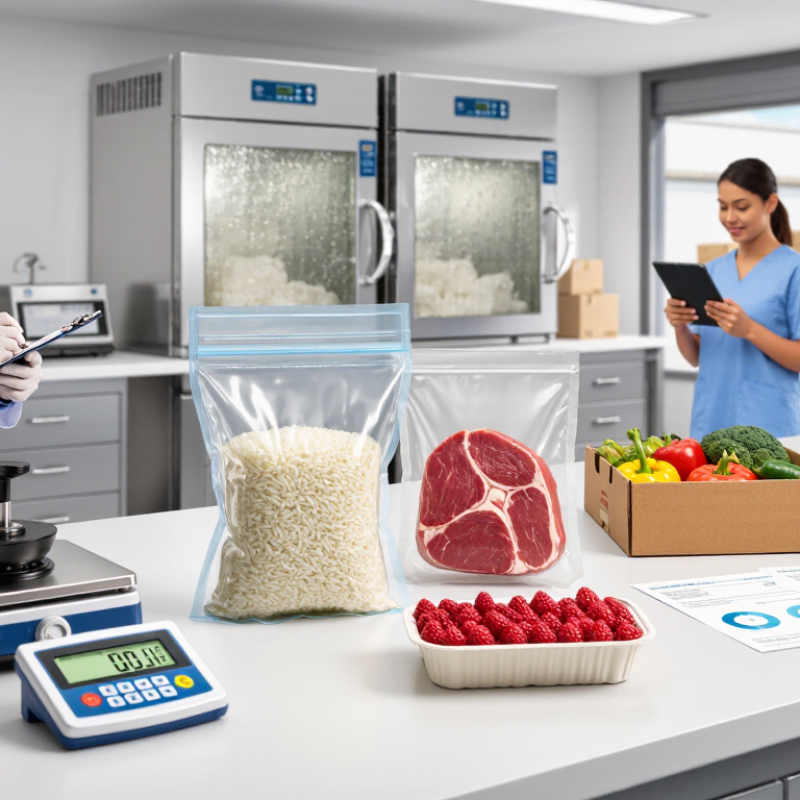
Global Food Packaging Requirements and Buyer Priorities
Choosing food production packaging for global buyers starts with safety, compliance, and product protection.
Safety comes first. Packaging should suit the food’s moisture, acidity, fat content, and storage temperature. Food-contact materials need documented testing, migration data, and traceability records. A sealed pouch may protect dry powder well, but it can fail when exposed to sharp frozen products. Destination markets may also require different labeling, recycling symbols, language, or importer information. Confirm current requirements with qualified local specialists before production.
Global buyers also examine shelf life, transport efficiency, and production consistency.
They may ask for carton dimensions, stacking limits, pallet plans, and temperature performance. These details affect warehouse space and shipping costs. From practical experience, a package that looks strong can still split at a corner during long-distance handling. Sample testing should include vibration, compression, drops, and repeated opening. Buyers value clear specifications more than attractive promises.
Sustainability matters, but it must support food safety and commercial performance.
Lightweight packaging can reduce freight emissions, yet thinner material may tear during distribution. There is no perfect option. Choose materials with realistic recovery systems in the target market, and avoid unsupported environmental claims. Test a pilot shipment, review damage records, and improve the design. The first version may fail. Honest feedback often produces the most reliable packaging solution.
Meeting International Food Packaging Regulations and Certifications
Choosing food production packaging for global buyers begins with the destination market, not the carton design. Each material should meet food-contact rules in the importing country. The EU requires traceability and migration control under its food-contact framework. In the United States, food-contact substances require appropriate regulatory clearance. Codex guidance can support risk assessment, but it does not replace national law. Check the exact product, temperature, shelf life, and filling process.
The evidence must be practical. Keep supplier declarations, migration test results, batch records, and change-control documents together. Tests should reflect real use, including hot filling, freezing, acidity, and fat contact. ISO 22000 certification can strengthen food-safety systems, while HACCP remains central to hazard control. Certification helps. It does not guarantee acceptance everywhere. A 2022 OECD Global Plastics Outlook reported that packaging creates about 40% of global plastic waste. Buyers therefore increasingly request recyclable structures, recycled content evidence, and clear disposal instructions.
Packaging decisions also affect food protection. FAO reported that 13.2% of food is lost after harvest and before retail, showing why barrier performance matters. A thinner pouch may reduce material use but increase spoilage. That trade-off deserves testing, not assumptions. I have seen teams approve attractive samples before checking seal strength and transport vibration. It is an avoidable mistake. No checklist is perfect. Review regulations before every market launch, document technical changes, and ask an independent laboratory to challenge the package under worst-case conditions.
How to Choose Food Production Packaging for Global Buyers?
Meeting International Food Packaging Regulations and Certifications
The chart highlights major regulatory milestones that influence food-contact packaging selection in important global markets. The year indicates the adoption, entry into force, or implementation milestone of the referenced framework; it is not a ranking of regulatory strictness. Before exporting, buyers should verify the packaging material, food type, temperature conditions, migration testing, declarations of compliance, and applicable recycling requirements for the destination market.
References: U.S. Food Additives Amendment of 1958; Regulation (EC) No 1935/2004; China GB 4806.1-2016; Japan’s Food Sanitation Act Positive List system implemented in 2020; EU Regulation (EU) 2025/40 on Packaging and Packaging Waste.
Designing Packaging for Transport, Branding, and Consumer Use
For global food buyers, packaging must survive a long, uneven journey. A carton may face humidity, cold storage, vibration, and repeated handling. I test filled samples before approving a design. Drop tests and stack trials reveal weak corners quickly. Do not trust appearance alone. A clean structure protects product quality and reduces avoidable claims. Ventilation suits some foods, while sealed barriers protect moisture-sensitive products. The right choice depends on product behavior, route, and storage time.
Packaging also communicates value before the product is opened. Use a clear visual hierarchy, readable type, and strong color contrast. Essential information should remain visible after scuffing or light moisture exposure. Keep it recognizable. Oversized graphics can look impressive but reduce useful space for instructions. I have seen attractive designs fail because printing became unclear on curved surfaces. Small trial runs often expose this problem earlier than digital previews.
At home, consumers judge convenience within seconds. Easy-open tabs, stable bases, resealable closures, and clean pouring improve daily use. Packaging should provide practical handling cues, storage instructions, and portion information. Yet extra features can increase cost and material use. Simpler is sometimes better, but that choice needs evidence. Real users may reveal awkward opening, sharp edges, or messy pouring. Their feedback is more valuable than a perfect presentation sample. Designs should be tested with buyers and consumers in each target market.
Evaluating Suppliers, Costs, Quality, and Sustainability
Choosing packaging for global food buyers starts with supplier evidence, not attractive samples. Request factory audit records, food-contact declarations, test reports, and recent production photos. Experienced buyers also ask how suppliers handle moisture, heat, sealing errors, and sudden material shortages. A sample may look perfect. It may fail after six weeks in a humid warehouse. Compare at least three suppliers using the same specification sheet. Check response speed, traceability, and willingness to disclose limitations. Reliability appears in small details.
Cost evaluation should include tooling, minimum order quantities, freight volume, storage, inspection, and rejected units. A cheaper film can increase leakage, waste, and customer complaints. Ask for cost scenarios at different order volumes. Quality should be measured with clear tests, such as seal strength, oxygen transmission, drop resistance, and print durability. Define acceptance limits before production begins. Still, specifications can be incomplete. I have seen teams overvalue laboratory results and underestimate packing-line performance. Trial runs matter.
Tips: Send identical samples to several suppliers. Test them on your real filling equipment. Record seal temperature, speed, and failure rates. For sustainability, request material composition, recycled content evidence, and end-of-life guidance. Do not accept vague claims such as “eco-friendly.” Compare packaging weight, product protection, and transport emissions together. A thinner pack is not automatically better. If it tears easily, its environmental benefit may disappear through wasted food. Ask suppliers for improvement plans, not only certificates. Review them annually, because material markets and production practices change.